When most homeowners think about a roof, they focus on shingles or gutters, but the real strength of any roof starts underneath with roof sheathing. It is the hidden structural layer that supports the entire roofing system.
Roof sheathing sits on rafters or trusses and provides a solid base for roofing materials. It helps distribute weight, adds strength, and protects the roof from wind, rain, and temperature changes.
In areas like Maryland and Virginia, weather conditions like humidity and storms can slowly damage roof sheathing over time without visible signs. This guide explains types, thickness, installation, and when replacement is needed.
Quick Answer: What Is Roof Sheathing?
Roof sheathing is the structural wood panel or board layer attached to roof rafters or trusses. It supports roofing materials, strengthens the roof frame, helps distribute weight, and provides a secure nailing surface for shingles or other roof coverings.
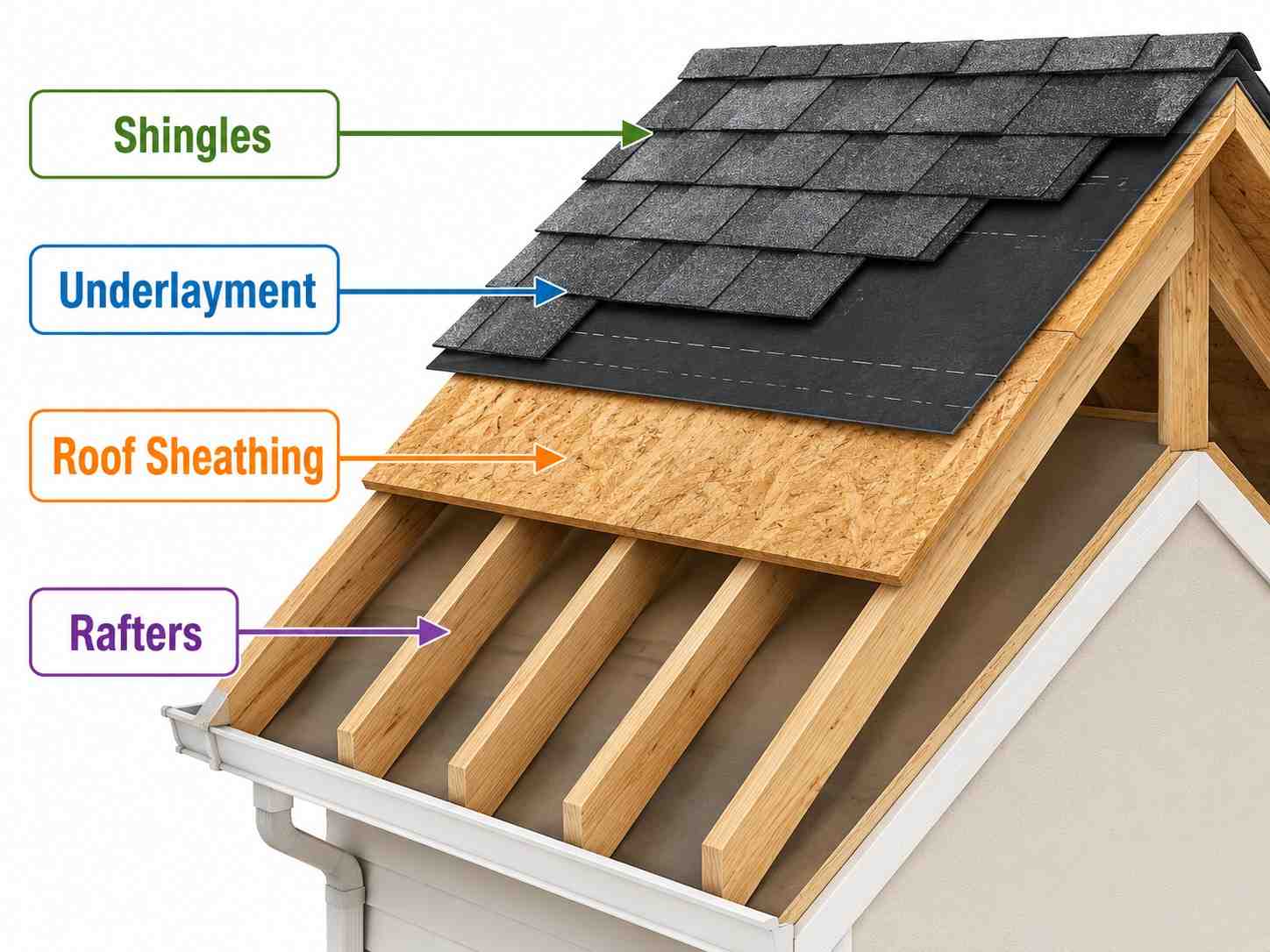
A properly installed roof sheathing system helps:
- Support shingles, metal roofing, slate, or synthetic roofing materials
- Improve roof strength and stability
- Distribute weight evenly across the roof structure
- Resist wind uplift
- Reduce roof movement
- Protect against moisture intrusion
- Extend the life of the roofing system
Roof Sheathing vs. Roof Decking: Are They the Same?
In most residential roofing conversations, roof sheathing and roof decking mean the same thing.
Both terms refer to the layer installed directly over rafters or trusses and beneath the roofing underlayment and shingles. Roofing contractors may use either term when discussing roof repairs, roof replacement, or storm damage restoration.
The main difference is wording:
- Roof sheathing is often used in construction and technical discussions.
- Roof decking is commonly used by roofers and homeowners.
So, if a contractor says your “roof deck is soft” or your “sheathing is rotted,” they are usually talking about the same structural layer.
Why Roof Sheathing Is Important
Many roofing problems actually begin beneath the shingles.
During roof replacement projects, contractors often discover damaged roof sheathing caused by years of leaks, poor attic ventilation, or trapped moisture. In many cases, homeowners don’t realize there’s a problem until shingles are removed.
Strong roof sheathing helps:
- Prevent roof sagging
- Improve resistance to storm damage
- Support heavy roofing materials
- Create a stable nailing surface
- Reduce structural movement
- Protect the roof system from premature failure
If the sheathing is weak, soft, rotted, or delaminated, the entire roofing system becomes more vulnerable. Shingles may not hold properly, nails may back out, leaks may return, and the roof may fail sooner than expected.
Types of Roof Sheathing
Several roof sheathing materials are used in residential construction today.
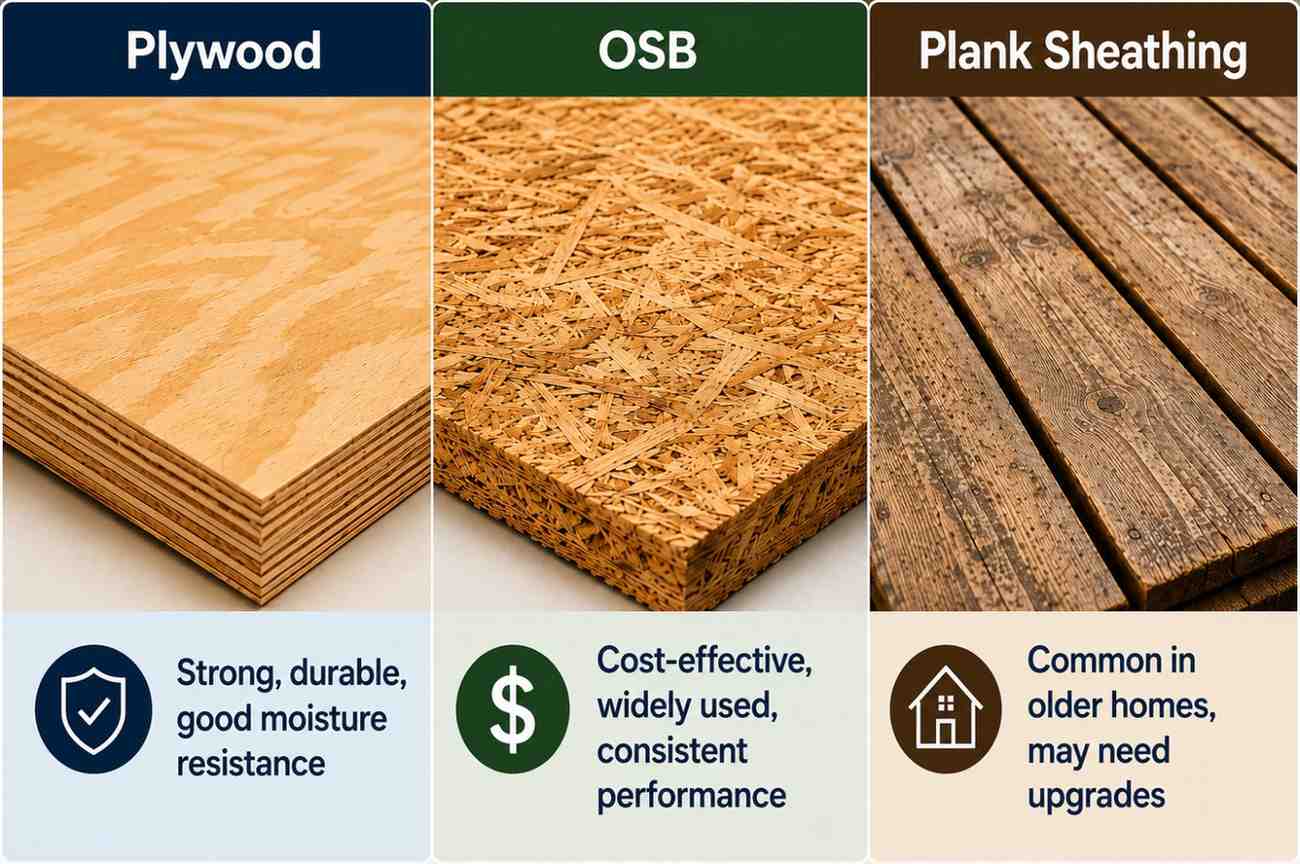
1. Plywood Roof Sheathing
Plywood is manufactured using multiple layers of wood veneer bonded together under pressure.
Benefits include:
- Excellent structural strength
- Better moisture resistance
- Long-term durability
- Reduced risk of swelling
Plywood performs especially well in regions that experience varying weather conditions throughout the year.
Best for: Homes exposed to humidity, rain, and seasonal temperature changes.
2. OSB (Oriented Strand Board)
OSB roof sheathing is one of the most common options used in modern residential construction.
It is made from compressed wood strands and adhesives.
Benefits include:
- Lower material cost
- Consistent performance
- Widely available
- Suitable for most residential roofs
However, prolonged moisture exposure can cause swelling if the roof is not properly ventilated.
Best for: Standard residential roofing projects with proper ventilation systems.
3. Plank Roof Sheathing
Plank sheathing is commonly found in older homes.
Instead of large panels, individual wooden boards were installed across rafters.
Characteristics include:
- Common in historic properties
- May contain gaps between boards
- Often requires upgrades during reroofing projects
Many older homes in Maryland and Virginia still contain plank sheathing beneath existing roofing materials.
Roof Sheathing Types Comparison Table
| Type | Strength | Moisture Resistance | Cost | Best Use Case |
|---|---|---|---|---|
| Plywood | High | High | Medium–High | Humid or storm-prone areas |
| OSB | Medium–High | Medium | Low | Standard residential homes |
| Plank Wood | Variable | Low–Medium | N/A (old system) | Older historic homes |
Plywood vs. OSB Roof Sheathing
Many homeowners ask whether plywood or OSB is better for roof sheathing. The answer depends on the home, budget, roof design, local weather conditions, and installation quality.
Plywood Advantages
Plywood generally performs well when moisture is a concern. It tends to dry more evenly and may be less prone to edge swelling than OSB when exposed to moisture.
Plywood may be preferred when:
- The home is in a humid or storm-prone area
- Long-term moisture resistance is a priority
- The roofing system needs added durability
- The homeowner wants a higher-end roof deck material
OSB Advantages
OSB is widely used because it provides reliable structural performance at a lower cost. Many residential roofs use OSB successfully when it is installed correctly and protected from long-term moisture exposure.
OSB may be preferred when:
- Budget is a major factor
- The roof has proper ventilation
- The installation follows manufacturer requirements
- The roof system will be protected quickly with underlayment and shingles
Which One Is Better?
For many homes, both plywood and OSB can work well. The most important factors are proper thickness, correct span rating, panel spacing, fastening, attic ventilation, and moisture protection.
A professional roofing contractor can inspect the roof structure and recommend the right sheathing material based on your home’s needs.
Roof Sheathing Thickness Guide
Choosing the correct roof sheathing thickness is essential for structural strength, nail holding, and long-term performance.
There is no single thickness that works for every roof. The right thickness depends on:
- Rafter or truss spacing
- Roof slope
- Roofing material
- Local building code
- Manufacturer requirements
- Roof load requirements
- Span rating of the sheathing panel
- Snow, wind, and weather exposure
- Whether the roof has plank decking or panel decking
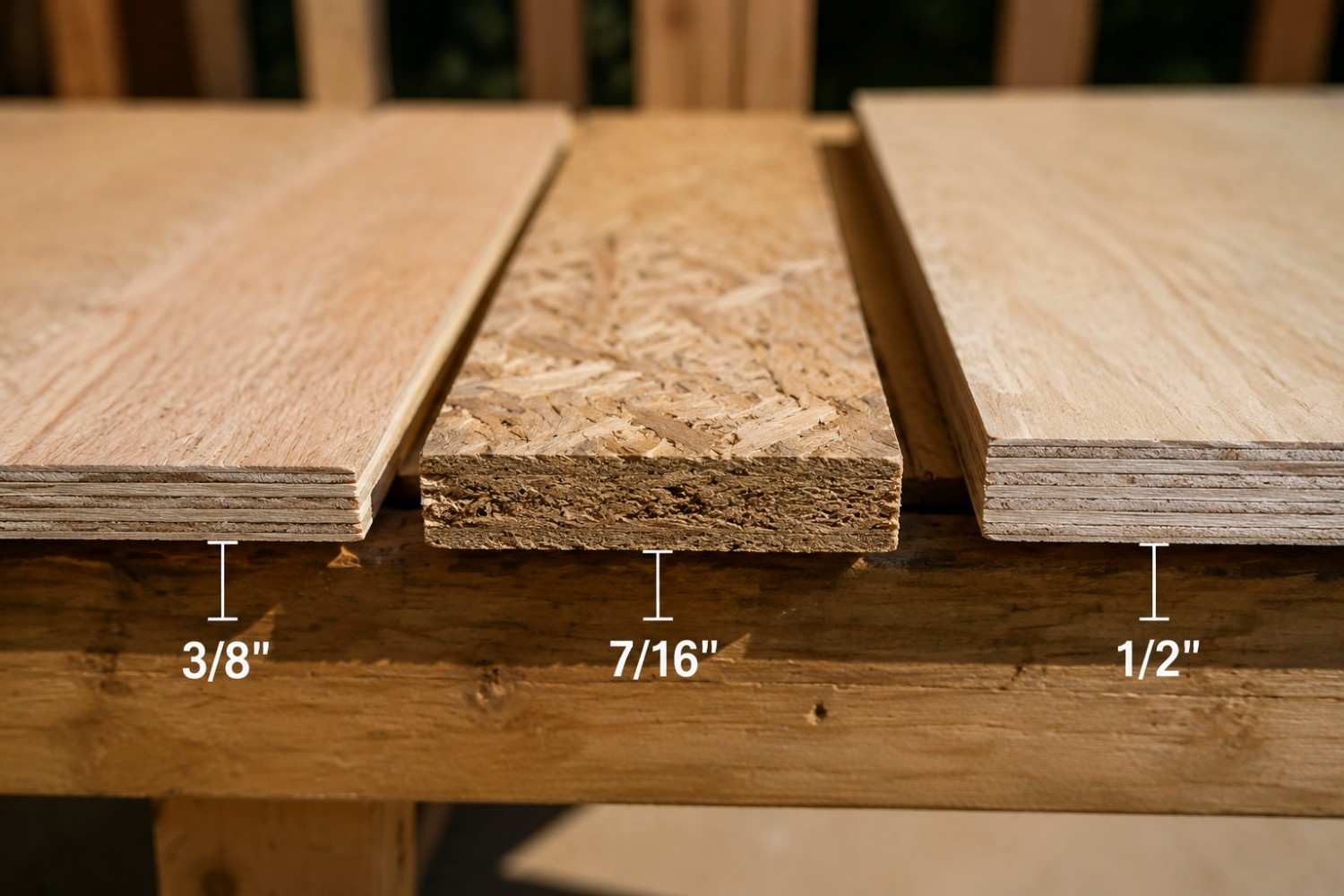
Common roof sheathing thickness options include:
3/8 Inch
This is sometimes used in lighter applications, but it may not be suitable for many modern residential roofing projects. It should only be used when allowed by code, roof design, and manufacturer specifications.
7/16 Inch
This is a common OSB roof sheathing thickness for many residential roofs. However, it is not automatically correct for every home. Framing spacing, span rating, and load requirements must be considered.
15/32 Inch or 1/2 Inch
This is commonly used when additional strength is needed. Many roofers prefer thicker panels because they provide better stiffness, improved nail holding, and greater durability.
5/8 Inch or Thicker
Thicker sheathing may be used for heavier roofing materials, wider framing spacing, higher load requirements, or specific structural needs.
Important Note
Roof sheathing thickness should never be selected by guesswork. A roofing contractor should follow local building codes, manufacturer installation instructions, and the panel’s span rating.
Signs Your Roof Sheathing Needs Replacement
Because sheathing roof is hidden beneath roofing materials, damage often goes unnoticed.
Watch for these warning signs:
- Sagging Roof Areas:Visible dips or uneven sections may indicate weakened sheathing.
- Recurring Roof Leaks: Persistent leaks can lead to rot beneath the roof surface.
- Soft Spots on the Roof: A spongy feeling while walking on the roof often signals moisture damage.
- Mold Growth in the Attic: Excess moisture can affect both sheathing and attic air quality.
- Water Stains on Ceilings: Interior staining may indicate sheathing deterioration beneath the roofing system.
- Loose or Failing Shingles: Damaged decking can reduce nail holding power and lead to shingle movement.
Roof Sheathing Installation Process
Proper installation is essential to ensure your roof performs reliably for years to come. Roof sheathing must be installed with precision and in accordance with building standards to provide a strong and stable foundation for the entire roofing system.
Here’s how professionals typically handle the installation process:
1. Inspection and Preparation
The process begins with a thorough inspection of the existing roof structure. Any damaged materials are removed, and the underlying frame is checked to ensure it is strong and ready for new sheathing.
2. Measuring and Cutting
Sheathing panels are carefully measured and cut to match the exact dimensions of the roof. This step ensures a proper fit and reduces gaps that could affect performance.
3. Panel Installation
The panels are installed evenly across the roof structure. Proper spacing is maintained between each panel to allow for natural expansion and contraction due to temperature changes.
4. Securing the Panels
Each panel is firmly attached to the rafters using nails or approved fasteners. Proper fastening patterns are followed to meet structural and safety requirements.
5. Final Inspection
Once installation is complete, the entire surface is checked to ensure it is smooth, secure, and ready for the next layers of the roofing system.
Why Professional Installation Matters
Roof sheathing affects the performance of every roofing component installed above it.
Professional roofing contractors understand:
- Building code requirements
- Proper fastening patterns
- Ventilation requirements
- Load-bearing considerations
- Moisture management techniques
Incorrect installation can lead to structural weakness, water intrusion, and premature roof failure.
At UD Roofing, every roofing project begins with a careful assessment of the roof structure to ensure the foundation beneath the shingles is strong, stable, and built for long-term performance.
Frequently Asked Questions
What is roof sheathing used for?
Roof sheathing provides structural support for roofing materials and creates a solid surface for installation while strengthening the overall roof system.
What is the best material for roof sheathing?
Plywood and OSB are the most common choices. Plywood generally offers better moisture resistance, while OSB provides a more budget-friendly option.
How thick should roof sheathing be?
Most residential roofs use 7/16-inch or 1/2-inch sheathing, although requirements vary depending on local building codes and roof design.
Can roof sheathing get wet?
Brief exposure during construction is usually acceptable. However, long-term moisture exposure can lead to swelling, rot, mold growth, and structural deterioration.
When should roof sheathing be replaced?
Replacement is typically necessary when sheathing shows signs of rot, water damage, mold, structural weakness, or significant deterioration.
Final Thoughts
Roof sheathing may not be visible once a roof is complete, but it remains one of the most important parts of the entire roofing system. It supports roofing materials, strengthens the roof structure, and helps protect your home from moisture and weather-related damage.
Whether you’re planning a new roof installation, replacing an aging roof, or dealing with storm-related repairs, understanding roof sheathing can help you make informed decisions about your home’s long-term protection.
For homeowners in Maryland and Virginia, investing in quality materials and professional installation is one of the best ways to ensure a stronger, longer-lasting roof.
READY TO TRANSFORM YOUR SPACE?
Discover top-rated construction, remodeling, and renovation services tailored to your needs.



Trusted by 50+ businesses across Maryland & Virginia.