If you are asking, “What is TPO roofing?” the simple answer is this: TPO roofing is a single-ply membrane roof system used on flat and low-slope roofs. TPO stands for thermoplastic polyolefin. It is popular because it is lightweight, reflective, flexible, and designed to protect flat roof surfaces from water, heat, UV exposure, and normal weather movement.
For many property owners in the United States, especially commercial and flat-roof building owners, TPO is one of the most practical roof replacement options in 2026. It is often used on offices, retail buildings, warehouses, apartment properties, schools, medical offices, garages, porches, and low-slope residential roof sections.
Quick Answer: What Is TPO Roofing?
TPO roofing is a white or light-colored flat roof membrane installed in large rolls over a roof deck, insulation, or cover board. The seams are usually joined with hot-air welding, creating a continuous waterproof surface.
In plain words, a TPO roof acts like a strong protective sheet over your building. It helps keep water out, reflects sunlight, and gives flat or low-slope roofs a clean, durable roofing surface.
What Does TPO Stand For?
TPO stands for thermoplastic polyolefin.
“Thermoplastic” means the material can soften with heat and harden again when it cools. That matters because professional roofers use hot-air welding tools to bond TPO seams together.
“Polyolefin” refers to the plastic-based roofing material used in the membrane. Most TPO roof membranes are reinforced, flexible, and made to perform on low-slope roofing systems.
Why Is TPO Roofing Used on Flat Roofs?
Flat and low-slope roofs need a different system than steep shingle roofs. Shingles are designed to shed water quickly on sloped surfaces. A flat roof needs a continuous membrane that can handle slower drainage and protect vulnerable areas such as seams, drains, vents, skylights, HVAC curbs, and edges.
That is where TPO works well.
A properly installed TPO system creates a waterproof layer across the roof. It is especially useful when a building owner wants a roof that is reflective, relatively lightweight, and suitable for commercial or residential low-slope applications.
How Does a TPO Roof System Work?
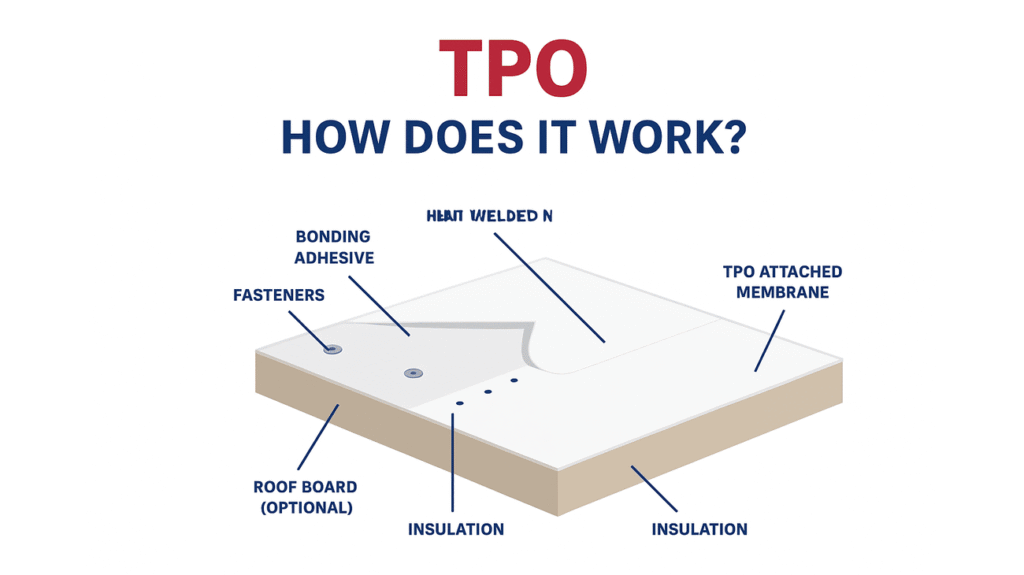
A TPO roof is not just one sheet of material. It is a full roofing system.
A complete TPO roof may include:
- Roof deck
- Vapor barrier, when needed
- Insulation
- Cover board
- TPO membrane
- Fasteners or adhesive
- Heat-welded seams
- Flashing
- Edge metal
- Drain details
- Pipe boots
- Walkway pads, if needed
The membrane is rolled across the roof surface and attached using a system approved for that roof. The seams are then welded with hot air. This seam-welding process is one reason TPO is widely used in commercial flat roofing.
When the seams, flashing, and drainage details are installed correctly, the roof can resist water intrusion and weather stress for many years.
Main Benefits of TPO Roofing
TPO is popular because it solves several flat roof problems at the same time. It is not the right system for every building, but it is a strong choice for many flat and low-slope roofs.
1. Reflective Surface
White TPO reflects sunlight better than many dark roof surfaces. This can help reduce roof surface heat during warm months.
For property owners in Maryland, Virginia, and other Mid-Atlantic areas, this matters because summer heat, humidity, and sun exposure can put stress on flat roofing materials.
A reflective roof does not guarantee lower energy bills by itself. Insulation, HVAC condition, building design, and roof condition also matter. But a reflective membrane can be a helpful part of an energy-conscious roofing system.
2. Heat-Welded Seams
TPO seams are usually joined with hot-air welding. A well-welded seam can be stronger and more reliable than a weak adhesive seam.
This is important because seams are one of the most common weak points on flat roofs. If seams open, water can enter the roofing system and damage insulation, decking, ceiling materials, and interior spaces.
3. Good Flat Roof Protection
TPO is designed for low-slope roof conditions. It can handle regular exposure to rain, UV rays, wind, and temperature changes.
In areas with heavy rain, storms, seasonal freeze-thaw cycles, and humidity, the quality of the roof installation becomes especially important. The membrane must be supported by proper drainage and strong flashing details.
4. Lightweight System
TPO is lighter than many older flat roofing systems. This can be helpful when replacing an old roof or upgrading a building that should not carry unnecessary roof weight.
A roofing contractor should still inspect the deck before installation. If the deck is wet, weak, soft, or damaged, it needs attention before the new membrane goes down.
5. Practical Cost-to-Performance Balance
Many property owners choose TPO because it offers a good balance between cost, performance, and energy benefits. It is often more budget-friendly than some specialty flat roof systems while still offering strong protection when installed correctly.
The final value depends on the full roof design, not just the membrane price.
TPO Roofing vs EPDM vs PVC
TPO is often compared with EPDM and PVC. All three are common flat roofing options, but they are not the same.
| Roofing System | Best Known For | Common Use |
|---|---|---|
| TPO | Reflective surface and heat-welded seams | Commercial and residential low-slope roofs |
| EPDM | Rubber-like flexibility and long track record | Commercial flat roofs and some residential flat roofs |
| PVC | Chemical and grease resistance | Restaurants, kitchens, and specialty commercial roofs |
TPO is often a good fit when the owner wants a reflective, heat-welded, single-ply roof system.
EPDM can be a strong choice when flexibility and proven long-term use are priorities.
PVC may be better for buildings exposed to grease, chemicals, or special commercial conditions.
A good roofing contractor will not recommend a material only because it is popular. The right choice depends on the roof condition, slope, drainage, building use, budget, and long-term maintenance needs.
How Long Does TPO Roofing Last?
A TPO roof can last many years when it is installed and maintained properly. Its real lifespan depends on the full roof system, not just the membrane.
Important factors include:
- Installation quality
- Membrane thickness
- Roof drainage
- Insulation condition
- Foot traffic
- Flashing details
- Storm exposure
- Maintenance
- Roof access
- Existing roof condition
TPO membranes are commonly available in different thicknesses, such as 45 mil, 60 mil, and 80 mil. A thicker membrane may be useful for roofs with more foot traffic, harsher exposure, or higher durability needs.
However, thickness alone does not make a roof successful. Poor drainage, bad seams, weak flashing, or trapped moisture can shorten the life of any flat roof.
Is TPO Roofing Good for Maryland and Virginia Properties?
Yes, TPO can be a strong option for many flat and low-slope roofs in Maryland and Virginia.
These areas can experience hot summers, heavy rain, high humidity, wind, and winter temperature changes. A TPO system can perform well in this type of climate when the roof has proper slope, drainage, insulation, and installation detail.
For commercial buildings, TPO is often used because it provides a clean roof surface, strong seam welding, and good reflectivity. For homes, it can be useful on flat roof additions, garages, porches, and low-slope sections where shingles are not suitable.
What Problems Can TPO Roofing Help Fix?
TPO may be recommended when a flat roof has reached the end of its service life or when repairs are no longer enough.
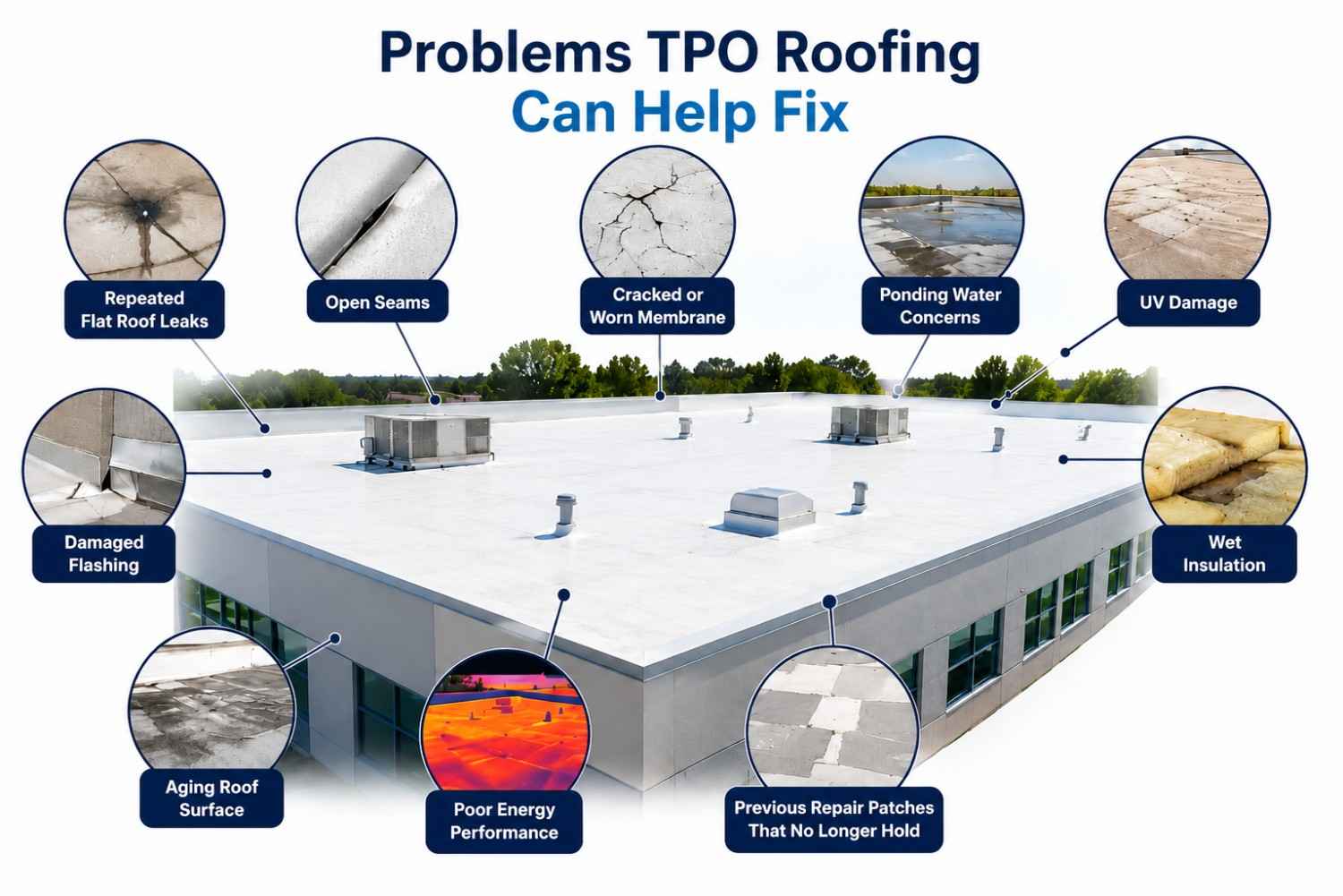
Common problems that may lead to TPO replacement include:
- Repeated flat roof leaks
- Open seams
- Cracked or worn membrane
- Ponding water concerns
- UV damage
- Damaged flashing
- Wet insulation
- Aging roof surface
- Poor energy performance
- Previous repair patches that no longer hold
Not every leak means you need a full replacement. Sometimes a targeted repair is enough. But if leaks keep coming back, or if moisture has spread under the roof system, replacement may be the smarter long-term decision.
What a Roofing Contractor Should Check Before Installing TPO
A professional inspection should come before any TPO installation. This is where real roofing experience matters.
Before recommending TPO, a contractor should check:
- Roof slope
- Drainage points
- Existing roof layers
- Moisture under the membrane
- Soft spots in the deck
- Condition of insulation
- Wall flashing
- Edge metal
- Pipe penetrations
- HVAC curbs
- Skylights
- Gutters and scuppers
- Signs of ponding water
- Interior leak stains
This inspection helps determine whether the roof needs repair, recovery, or full replacement.
A strong TPO installation is not just about rolling out membrane. The difficult parts are often the details: corners, drains, seams, curbs, walls, and edges.
When Is TPO Not the Best Choice?
TPO is not perfect for every roof.
It may not be the best choice if:
- The roof has serious structural damage
- Drainage problems are not corrected
- The building has heavy chemical or grease exposure
- The roof gets extreme foot traffic without protection
- The installer is not experienced with TPO welding
- The owner wants the cheapest possible short-term patch
In those cases, another flat roof system may be better. PVC, EPDM, modified bitumen, or another solution may fit the building more closely.
The right answer depends on the roof, not just the material name.
TPO Roofing Maintenance Tips
A TPO roof still needs basic maintenance. No flat roof should be ignored after installation.
Property owners should:
- Keep drains clear
- Remove leaves and debris
- Check after major storms
- Watch for punctures
- Limit unnecessary foot traffic
- Use walkway pads near HVAC units
- Inspect seams and flashing
- Repair small issues early
- Schedule regular professional inspections
Small problems are usually cheaper to fix early. Waiting too long can allow water to spread under the membrane and damage the system from below.
Is TPO Roofing Worth It?
TPO roofing is worth considering if your building has a flat or low-slope roof and you want a reflective, waterproof, single-ply membrane system.
It is especially useful for property owners who want:
- A practical flat roof replacement
- A light-colored reflective roof surface
- Heat-welded seams
- Commercial-grade roof protection
- A balance of cost and performance
- A system suitable for flat and low-slope roofs
For 2026 roofing decisions, TPO remains one of the most common choices for commercial and low-slope roof projects because it answers the main concerns property owners have: leaks, heat, durability, and long-term value.
Need Help Choosing the Right Flat Roof System?
If your flat roof is leaking, aging, or showing signs of wear, the best next step is a professional roof inspection.
United Developers provides roofing services for property owners in Maryland and Virginia, including flat roofing, TPO roofing, roof installation, roof replacement, and roof repair.
A proper inspection can help you decide whether TPO is the right system or whether another flat roof material would be a better fit for your building.
READY TO TRANSFORM YOUR SPACE?
Discover top-rated construction, remodeling, and renovation services tailored to your needs.



Trusted by 50+ businesses across Maryland & Virginia.