A gutter system may look like one simple piece of metal along the roofline, but it is actually made up of several connected parts. Each piece has a job. When all gutter parts work correctly, rainwater moves off the roof, through the gutters, down the downspouts, and away from the foundation. When one part fails, water can overflow, leak behind the gutter, damage fascia boards, stain siding, or collect near the home.
For homeowners in Maryland and Virginia, gutters work hard through heavy rain, seasonal storms, falling leaves, humidity, and winter weather. That is why understanding the basic parts of a gutter system can help you spot problems early and avoid costly water damage.
This guide explains the main gutter components, what they do, and when they may need repair or replacement.
What Are Gutter Parts?
Gutter parts are the individual pieces that make up a roof drainage system. These include the gutter channels, downspouts, elbows, hangers, outlets, end caps, miters, gutter guards, sealants, and extensions.
A complete gutter system should do three things well:
- Collect rainwater from the roof edge
- Move water smoothly through the gutter channel
- Carry water safely away from the foundation
If the system is clogged, loose, undersized, or damaged, water may not drain properly. That can lead to roof edge damage, wood rot, basement moisture, soil erosion, and foundation problems.
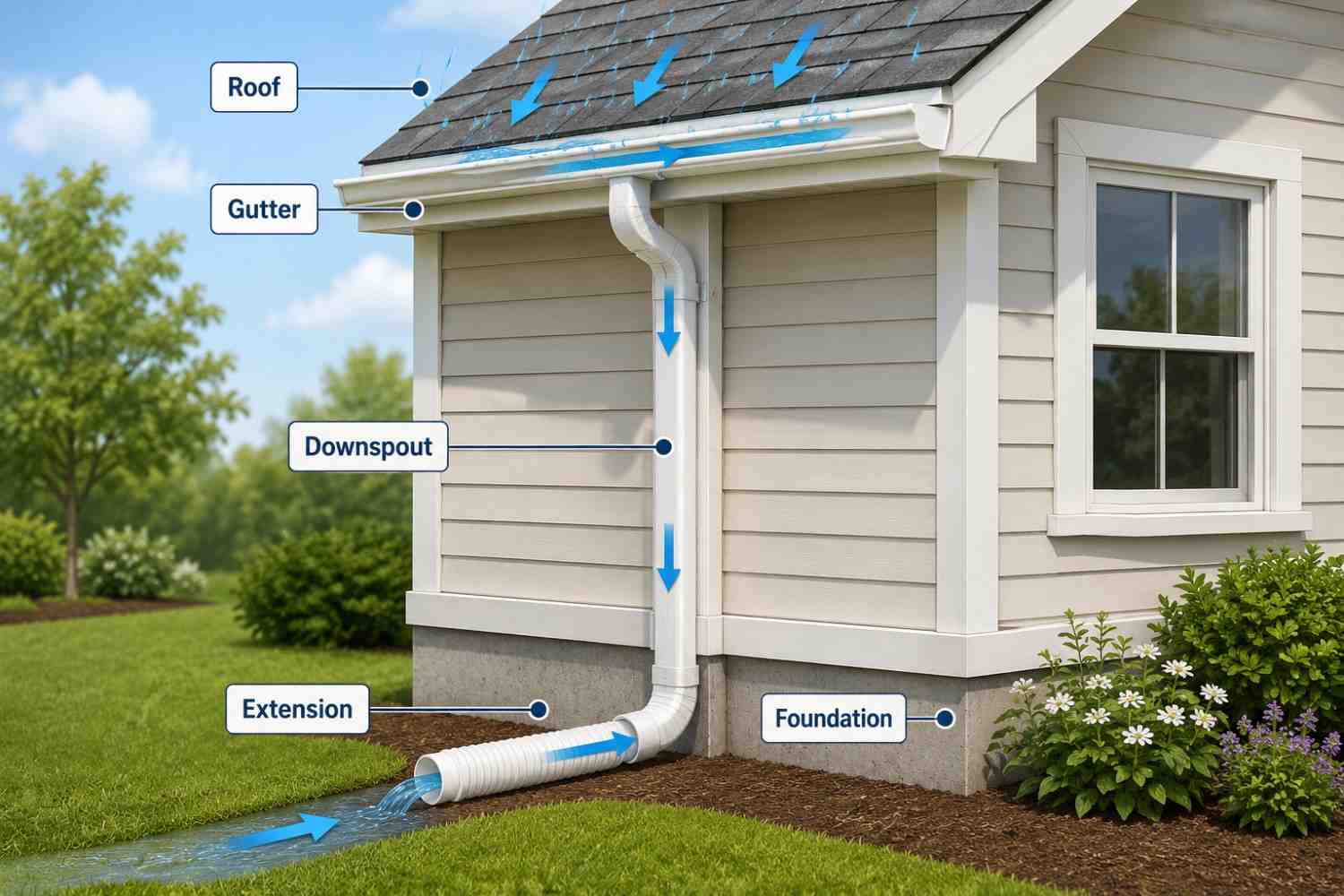
Main Gutter Parts and What They Do
Here is a quick overview of the most common rain gutter parts homeowners should know.
| Gutter Part | Main Purpose | Common Issue |
|---|---|---|
| Gutter section | Collects roof water | Sagging, leaks, rust |
| End cap | Closes gutter ends | Dripping at edges |
| Hanger/bracket | Holds gutter in place | Loose or pulling gutters |
| Outlet | Connects gutter to downspout | Clogs or leaks |
| Downspout | Carries water downward | Blockage or separation |
| Elbow | Changes water direction | Debris buildup |
| Miter/corner | Connects gutter corners | Seam leaks |
| Gutter guard | Blocks leaves and debris | Poor water flow if installed wrong |
| Downspout extension | Moves water away from home | Missing or too short |
| Splash block | Controls water at ground level | Water pooling near foundation |
Gutter Sections
The gutter section is the long horizontal channel attached to the edge of the roof. It catches rainwater as it runs off the shingles and directs it toward the downspout.
Most residential gutters are made from aluminum, vinyl, steel, copper, or galvanized metal. Aluminum is one of the most common choices because it is lightweight, rust-resistant, and works well for many homes.
Signs Gutter Sections Need Repair
A gutter section may need repair or replacement if you notice:
- Water spilling over the front edge
- Cracks, holes, or rust spots
- Gutters pulling away from the fascia
- Standing water after rain
- Sections bending or sagging
- Water leaking behind the gutter
Standing water is a major warning sign. Gutters should have a slight slope toward the downspout. If water sits inside the channel, the pitch may be wrong, the gutter may be clogged, or the hangers may be loose.
End Caps
End caps are installed at the open ends of gutter sections. Their job is simple: keep water from running out of the sides.
Even though they are small, end caps are common leak points. Over time, the sealant around the end cap can crack or dry out. The cap can also loosen from expansion, contraction, wind, or poor installation.
When End Caps Fail
A bad end cap may cause dripping at the side of the gutter. This can stain siding, damage trim, or create wet areas near the home.
In many cases, an end cap does not require full gutter replacement. It may only need to be cleaned, resealed, and secured. But if the gutter end is bent or corroded, replacing that small section may be the better long-term fix.
Gutter Hangers and Brackets
Gutter hangers, also called brackets, support the gutter and keep it attached to the fascia board. These parts are very important because gutters become heavy when filled with rainwater, leaves, ice, or debris.
Modern gutter systems often use hidden hangers. These provide strong support and give the gutter a cleaner appearance. Older systems may use spikes and ferrules, which can loosen over time.
Why Loose Hangers Are a Problem
When hangers loosen, the gutter can pull away from the roofline. This creates gaps where water may run behind the gutter instead of into it.
Loose hangers can also change the slope of the gutter. When the slope is wrong, water does not flow properly to the downspout. That can lead to overflow, leaks, and extra weight on the fascia board.
Downspouts
Downspouts are the vertical pipes that carry water from the gutter down to the ground. They are one of the most important gutter system parts because they control where roof water goes after it leaves the gutter channel.
A home may need several downspouts depending on the roof size, roof pitch, gutter length, and drainage layout.
Common Downspout Problems
Downspouts can clog with leaves, small sticks, roofing granules, seed pods, and other debris. In Maryland and Virginia, tree-covered neighborhoods often deal with downspout clogs during fall and after storms.
Signs of downspout problems include:
- Water overflowing near the downspout
- Water backing up in the gutter
- Leaking joints
- Loose downspout straps
- Water pooling close to the foundation
- A downspout that shakes or rattles in wind
If water is spilling over the gutter during rain but the gutter itself looks clean, the downspout may be blocked.
Downspout Elbows
Elbows are angled pieces attached to downspouts. They help change the direction of water flow. You will usually see elbows near the top of the downspout, where the gutter connects to the vertical pipe, and near the bottom, where water is directed away from the house.
Elbows are useful, but they are also common clog points because leaves and debris can get stuck in the bend.
When Elbows Need Attention
An elbow may need cleaning or replacement if water leaks at the joint, the piece is cracked, or water is not flowing through the downspout properly. A dented elbow can also restrict water flow during heavy rain.
Gutter Outlets
The outlet is the opening that connects the gutter channel to the downspout. It allows water to leave the gutter and enter the downspout.
This small part has a big job. If the outlet is too small, poorly sealed, or clogged, the gutter may fill faster than it can drain.
Signs of Outlet Issues
You may have an outlet problem if water collects around the downspout opening or overflows from that area during rain. Sometimes the outlet only needs cleaning. Other times, it may need resealing, resizing, or replacement.
Miters and Corner Pieces
Miters are used where two gutter sections meet at a corner. They allow water to move around the roofline without spilling out.
Corners are one of the most common places for gutter leaks because they have seams and sealant. Over time, weather movement can weaken those seams.
Common Corner Problems
If you notice water dripping from a gutter corner, the miter may need to be resealed. If the corner is bent, rusted, or repeatedly leaking, replacement may be the better option.
Gutter Guards
Gutter guards are covers installed over gutters to reduce leaves and debris. They can be helpful for homes with nearby trees, but they do not make gutters completely maintenance-free.
Common gutter guard types include:
- Mesh guards
- Screen guards
- Reverse-curve guards
- Foam inserts
- Brush-style guards
The right option depends on your roof style, tree coverage, and gutter size. A poorly fitted gutter guard can cause water to run over the edge instead of into the gutter.
For homeowners in wooded areas of Maryland and Virginia, gutter guards can reduce cleaning needs, but they should still be inspected regularly.
Downspout Extensions and Splash Blocks
Water should not exit the downspout right next to the foundation. Downspout extensions and splash blocks help move water away from the home.
A splash block sits under the downspout opening and spreads water outward. A downspout extension carries water farther into the yard or toward a drainage area.
Why Extensions Matter
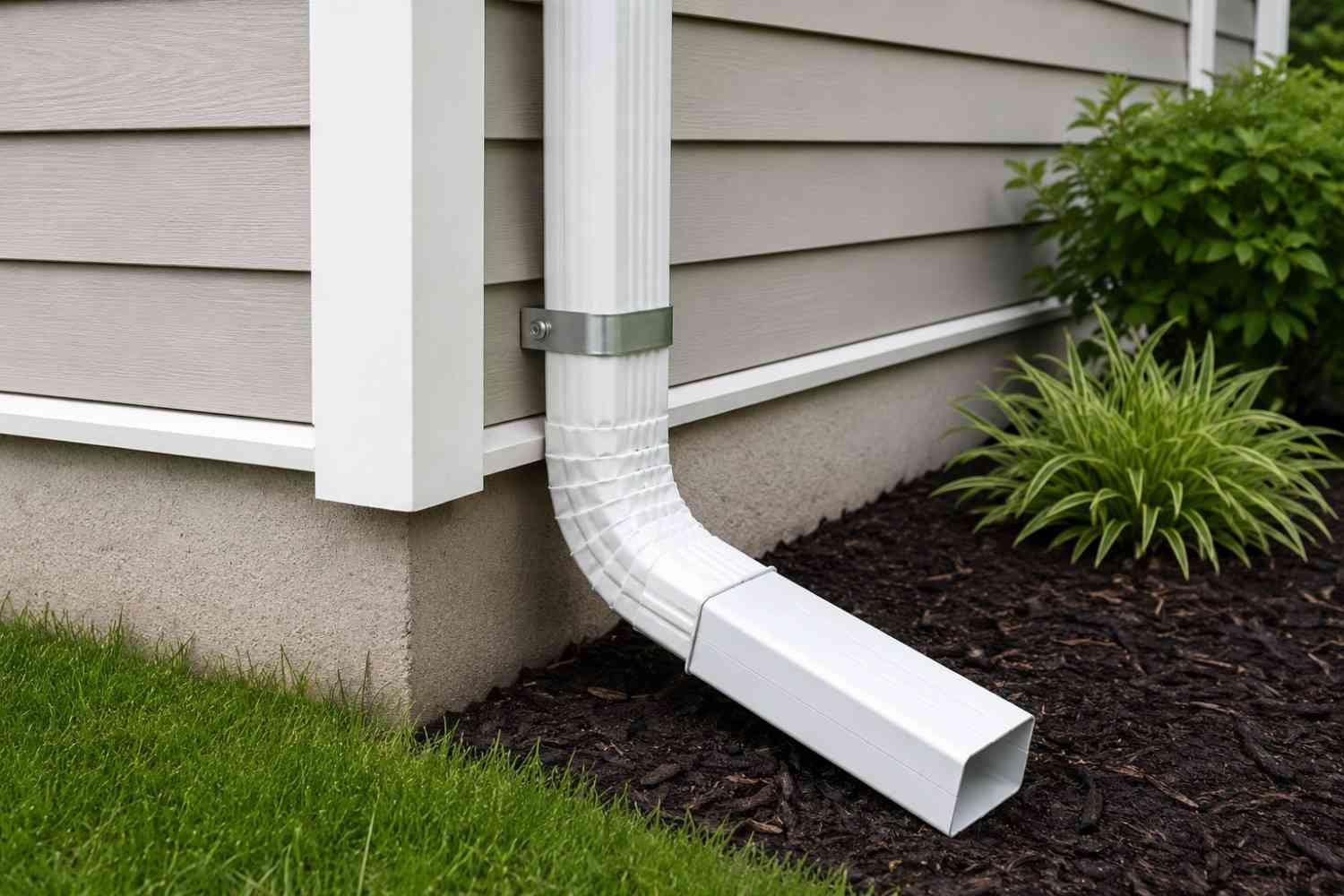
If water drains too close to your home, it can lead to:
- Soil erosion
- Foundation stress
- Basement dampness
- Landscape damage
- Mold or mildew around the foundation
A simple extension can often solve a serious drainage problem.
Gutter Sealant and Fasteners
Sealant and fasteners are small but important gutter components. Sealant helps prevent leaks at seams, outlets, end caps, and corners. Fasteners keep parts secured to the roofline and wall.
Over time, sealant can crack and screws can loosen. Many small gutter leaks are caused by worn sealant, not by a bad gutter section.
When Should Gutter Parts Be Repaired or Replaced?
Not every gutter issue means you need a full replacement. Some problems are small and can be repaired quickly.
Repair May Be Enough When:
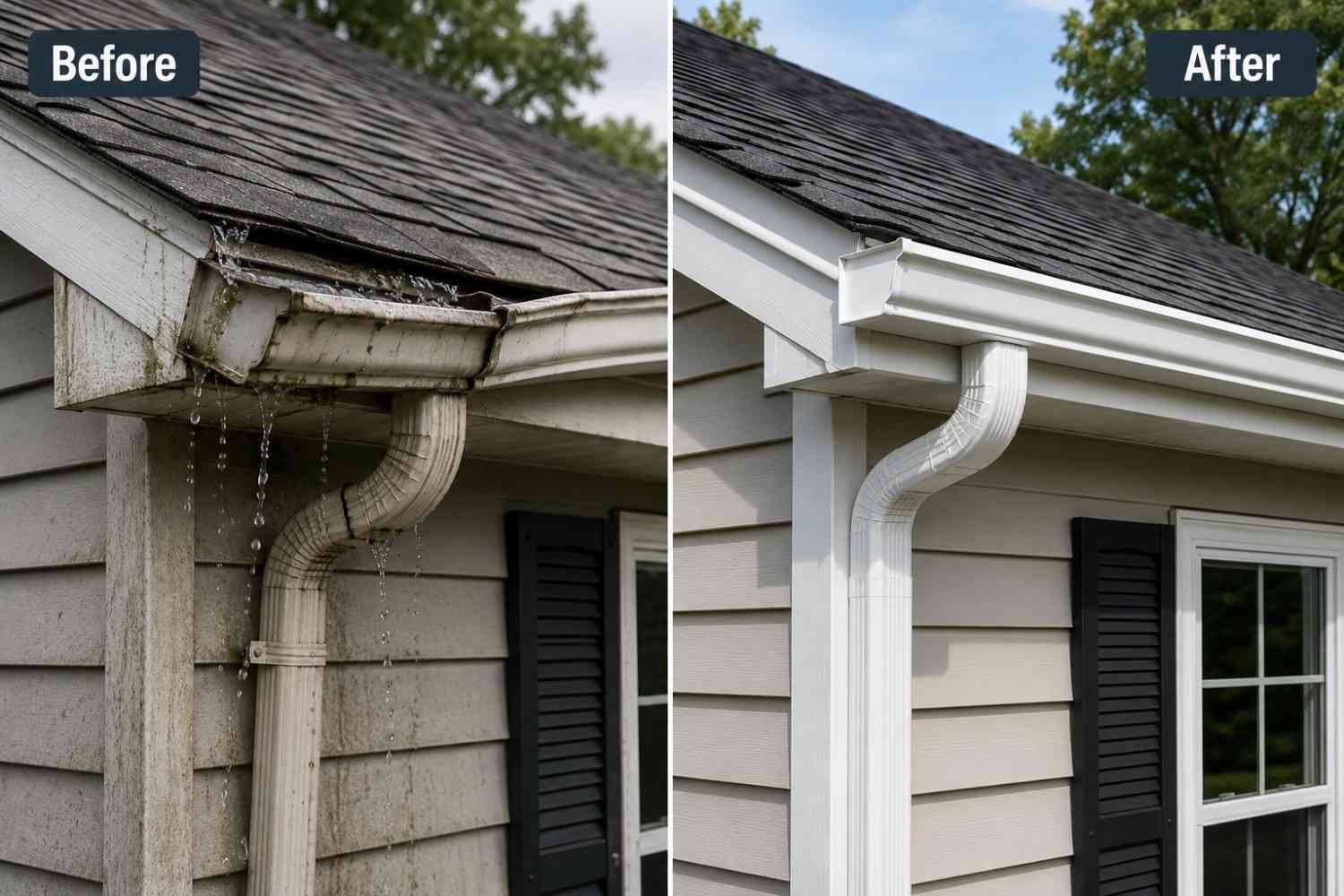
- One joint is leaking
- A downspout strap is loose
- One elbow is clogged or cracked
- An end cap needs resealing
- A small section is slightly damaged
Replacement May Be Better When:
- Gutters are sagging in several areas
- Water overflows even after cleaning
- There is widespread rust or corrosion
- Multiple seams are leaking
- Fascia boards are damaged
- Gutters are too small for the roof
- The system is old and repeatedly failing
If you keep fixing one part after another, a full gutter replacement may be more cost-effective.
How Homeowners Can Inspect Gutter Parts
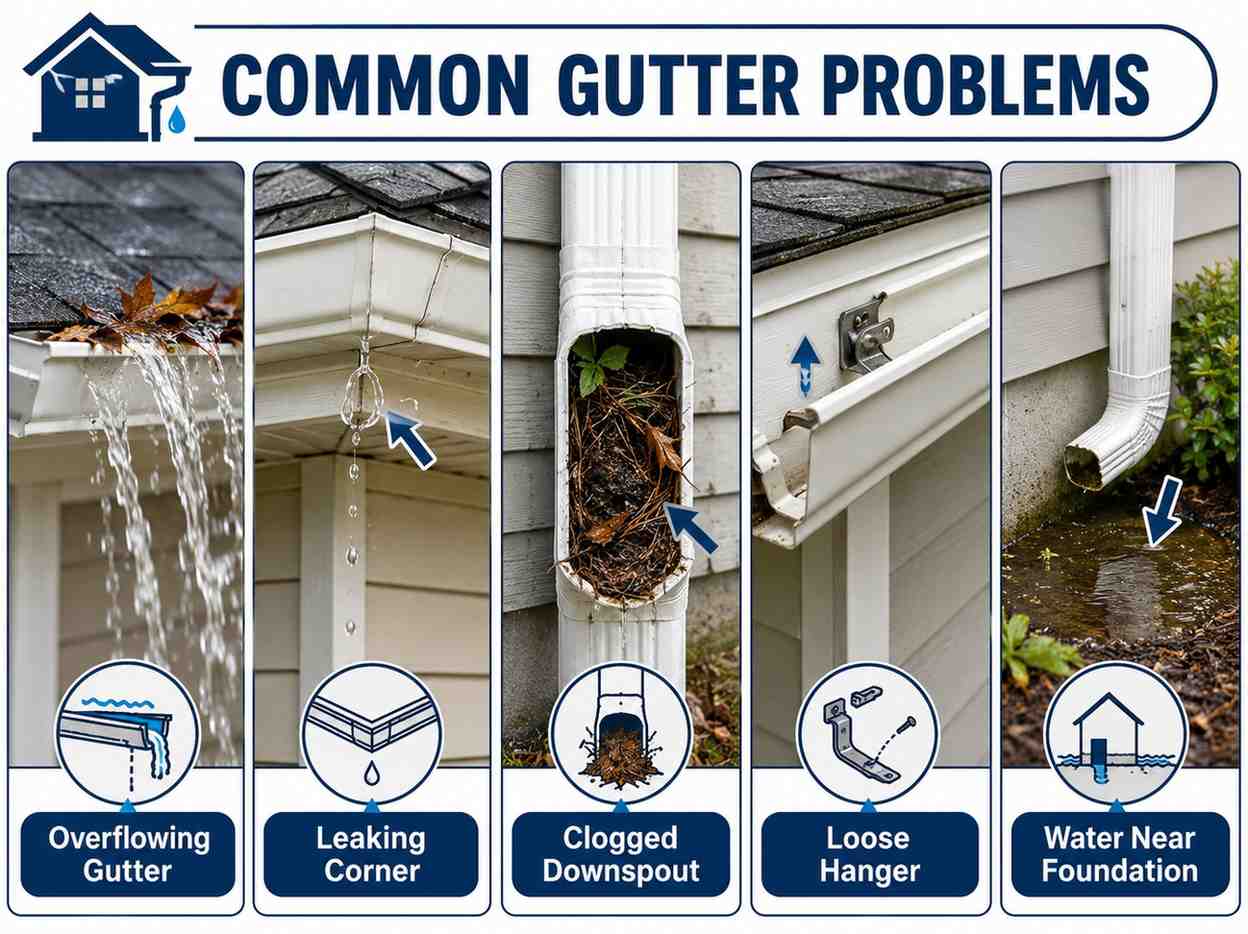
You do not need to climb on the roof to notice many gutter problems. After a rainstorm, walk around your home and look for these signs:
- Water dripping from corners
- Overflowing gutters
- Soil washed away near the foundation
- Loose or tilted downspouts
- Stains on siding
- Peeling paint near roof edges
- Gutters pulling away from the fascia
- Water pooling near walkways or basement walls
These signs usually mean one or more gutter parts are not working correctly.
Choosing the Right Gutter Parts for Your Home
The best gutter parts depend on your home’s roof size, roof pitch, drainage needs, and local weather. Larger roofs may need wider gutters, larger downspouts, or additional drainage points. Homes with many trees may benefit from gutter guards and larger outlets.
In Maryland and Virginia, seasonal leaves, storms, and humidity can wear down gutter systems over time. That makes proper installation and regular inspection important.
A local roofing and gutter company like UD Roofing can inspect your gutter system and recommend the right repair or replacement options based on your home’s actual drainage needs.
FAQs About Gutter Parts
What are the most important gutter parts?
The most important gutter parts are the gutter sections, downspouts, hangers, outlets, elbows, end caps, and extensions. These parts work together to collect roof water and move it away from the home.
What part of the gutter usually leaks first?
Leaks often happen first at seams, corners, end caps, and outlets. These areas use sealant and connections, which can weaken over time.
Are gutter guards necessary?
Gutter guards are not required for every home, but they can help reduce debris buildup. They are especially useful for homes near trees.
Why is water overflowing from my gutters?
Overflowing gutters are usually caused by clogs, poor slope, blocked downspouts, undersized gutters, or loose hangers.
How often should gutters be inspected?
Gutters should be inspected at least twice a year, usually in spring and fall. They should also be checked after heavy storms.
Final Thoughts
Understanding gutter parts helps homeowners make smarter decisions about repair, replacement, and maintenance. The gutter channel collects water, hangers support the system, outlets send water into downspouts, elbows guide the flow, and extensions move water away from the foundation.
When these parts work together, your home is better protected from leaks, wood rot, siding stains, soil erosion, and foundation problems.
If your gutters are leaking, sagging, overflowing, or pulling away from the roofline, it may be time for a professional inspection. For homeowners in Maryland and Virginia, UD Roofing can help with gutter installation, gutter replacement, and roof drainage solutions that keep your home protected year-round.
Ready to Transform Your Space?
Contact Us Today!
Get in touch with our team today for trusted service.




Trusted by 50+ businesses across Maryland & Virginia.