Windows are critical elements of any building, providing light, ventilation, insulation, and aesthetic appeal. Each window consists of multiple components, each with a specific function that contributes to the overall performance, durability, and energy efficiency of the structure. A thorough understanding of the parts of a window is essential for homeowners, builders, and contractors to ensure proper maintenance, repairs, and informed decisions when selecting or upgrading windows.
This guide provides a detailed overview of window components, including frames, sashes, glass panes, and hardware, along with practical tips for maintenance and professional examples to enhance understanding.
What Are the Main Parts of a Window?
Windows are made up of several key components that work together to provide light, ventilation, insulation, and security. Even a simple window includes structural, functional, and decorative elements.
Key Parts of a Window (Overview)
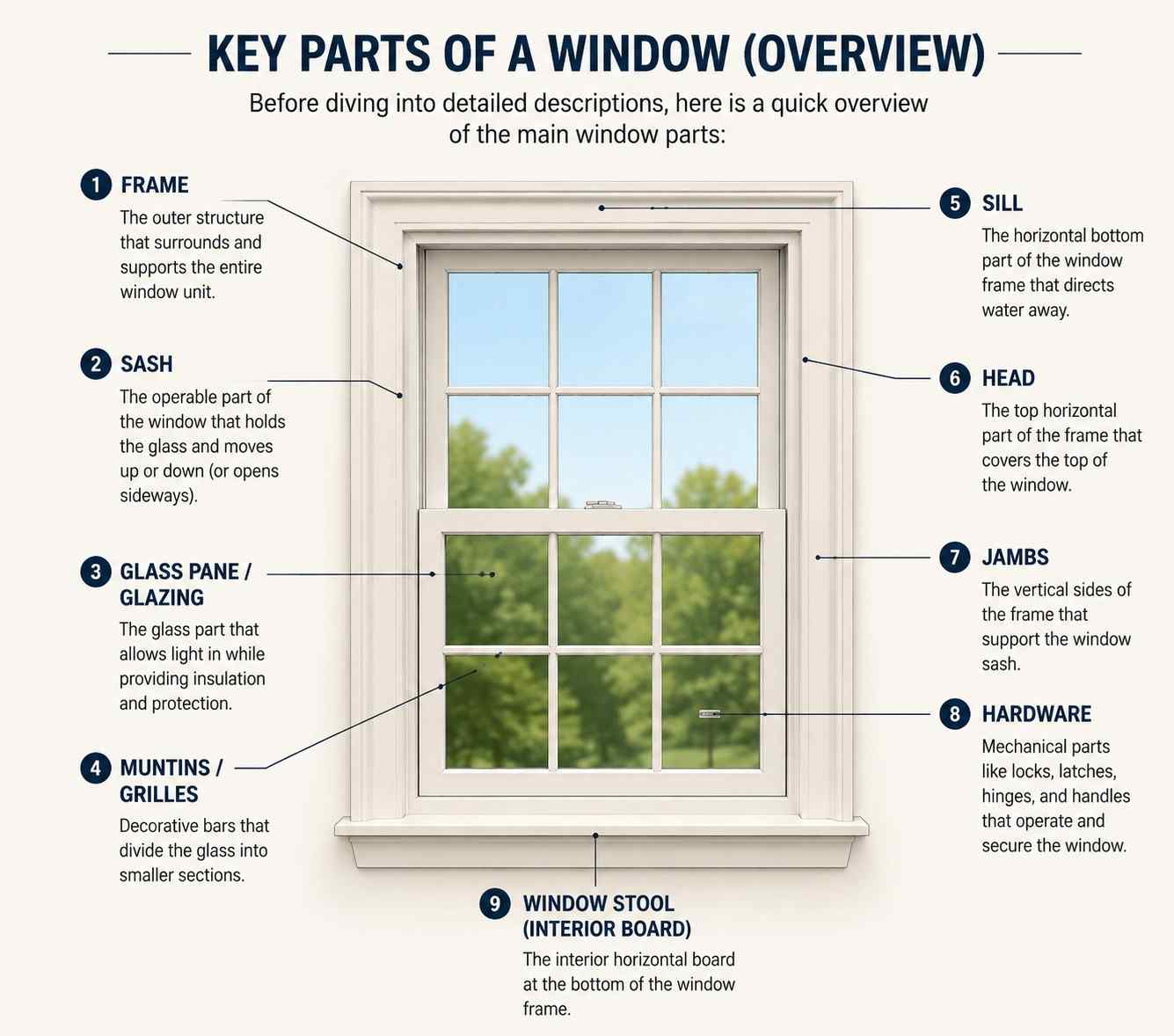
Key Parts of a Window (Overview)
- Window Stool (interior board)
- Frame
- Sash
- Glass Pane / Glazing
- Muntins / Grilles
- Sill
- Head
- Jambs
- Hardware
Frame
The frame is the outer structure that holds the entire window assembly. It provides stability and ensures all components fit securely. Window frames can be made from wood, aluminum, vinyl, or composite materials depending on durability, insulation, and aesthetic requirements.
Professional Tip: Regularly inspect frames for gaps, warping, or moisture damage. Proper sealing around the frame prevents drafts and water infiltration, increasing energy efficiency.
Sash
The sash is the part that holds the glass pane. Depending on the window type, the sash may be fixed, sliding, or swing outward. Sashes are designed for smooth operation and support for the glass.
Professional Example: In double-hung windows, sashes can be removed easily for cleaning. Choosing high-quality sash materials like fiberglass ensures long-term durability and minimal maintenance.
Glass Pane / Glazing
The glass pane, also called glazing, is the transparent section of the window. Modern windows often feature double or triple glazing to enhance insulation, reduce noise, and protect against UV rays.
Professional Tip: Opt for low-E or argon-filled glazing in climates with extreme temperatures to reduce energy costs and maintain comfortable indoor temperatures.
Muntins / Grilles
Muntins or grilles are strips that divide a glass pane into smaller sections. They can be purely decorative or provide structural reinforcement for larger glass panels.
Professional Example: Traditional-style homes often use muntins to match historical architecture. Removable muntins make cleaning double-glazed panes easier without compromising aesthetics.
Sill
The sill is the bottom horizontal part of the window frame. It supports the window and directs water away from the building. Proper sill design prevents leaks, wood rot, and structural damage.
Professional Tip: Exterior sills should slope slightly outward. Interior sills can include a drip edge to reduce moisture accumulation. Using composite materials improves durability in wet climates.
Head
The head is the top horizontal section of the window frame. It supports the structure above the window and works with jambs and sill to maintain overall stability.
Professional Example: Reinforced heads are used in large picture windows to prevent sagging or misalignment over time.
Jambs
Jambs are the vertical sides of the window frame. They connect the head and sill while holding the sash securely. Well-constructed jambs ensure smooth operation of sliding or double-hung sashes.
Professional Tip: Inspect jambs for paint peeling, moisture damage, or warping. Repair or replace damaged jambs promptly to prevent further structural issues.
Hardware
Window hardware includes handles, cranks, locks, latches, hinges, and rollers. It ensures proper operation, safety, and security.
Professional Tip: Lubricate moving hardware annually. Replace worn-out locks and cranks immediately to maintain function and prevent security risks.
Window Stool
The window stool is the interior board at the bottom of the window. It provides a finished look, acts as a small shelf, and protects the bottom edge of the frame.
Professional Example: Installing a durable hardwood stool in high-traffic areas prevents scratches and adds a polished finish to the window assembly.
Types of Windows and Their Components
Different window types have unique movable parts and hardware. Understanding these is essential for maintenance and repair.
Comparison Table:
| Window Type | Movable Parts | Common Hardware | Best Use |
|---|---|---|---|
| Single-Hung | Bottom sash | Locks | Affordable, basic ventilation |
| Double-Hung | Top & bottom sashes | Locks, pulleys | Easy cleaning, adjustable airflow |
| Casement | Side-hinged sash | Crank handle, hinges | Full ventilation, ideal over sinks |
| Sliding | Horizontal sash | Rollers, locks | Wide views, smooth operation |
| Fixed | None | None | Energy efficiency, low maintenance |
Professional Tip: Select window types based on room function and climate. For example, casement windows are ideal in kitchens, while fixed windows are energy-efficient for large glass walls.
Maintenance and Practical Tips
Proper care extends the life of your windows.
- Cleaning: Use a soft cloth and mild cleaner for glass. Avoid harsh chemicals that may damage frames.
- Hardware Check: Inspect locks, cranks, and hinges annually. Replace worn parts to maintain security.
- Seal Inspection: Check weatherstripping and caulking for leaks. Replace if damaged.
- Paint & Finish: Wooden frames require regular painting or staining to prevent decay.
Professional Assistance: For expert installation, or replacement, our window services provide solutions tailored to every type of home or project.
FAQs About Parts of a Window
1. What is the difference between a sash and a frame?
The frame is stationary and supports the entire window, while the sash holds the glass and may move for ventilation.
2. What are muntins used for?
Muntins divide glass into smaller sections for decorative or structural purposes.
3. How many parts does a standard window have?
A standard window has 8–10 main parts: frame, sash, glass panes, sill, head, jambs, hardware, and interior finishes like window stool.
4. Can window hardware be replaced?
Yes. Handles, locks, cranks, and hinges can often be replaced without removing the entire window.
5. What is the purpose of a window sill?
The sill directs water away from the building, supports the window, and prevents structural damage.
Conclusion
Windows are carefully designed systems, where every component from frame and sash to glass panes, hardware, and interior finishes like window stool plays a critical role in comfort, security, and energy efficiency. Proper understanding of the parts of a window allows homeowners and contractors to maintain, repair, and select the right window type for each space.
Which window component do you consider most important for your home’s efficiency and safety?
Ready to Transform Your Space?
Contact Us Today!
Get in touch with our team today for trusted service.




Trusted by 50+ businesses across Maryland & Virginia.