Roof decking is the solid layer of material installed between your roof structure and the outer roofing materials, such as shingles or metal panels. It is also called roof sheathing, and it gives your roof the strong base it needs to hold the roofing system in place.
Many homeowners only think about shingles when they look at a roof, but the deck underneath is just as important. If the roof deck is weak, soft, rotten, or damaged, even new shingles will not perform properly. A strong roof starts with a strong base.
For homeowners in Maryland and Virginia, roof decking matters because changing weather, rain, humidity, wind, and old roofing materials can all affect the condition of the roof structure. UD Roofing helps homeowners understand these hidden roofing issues before they become bigger problems.
What Is Roof Decking?
Roof decking is the flat surface attached to the roof framing. It sits on top of the rafters or trusses and supports the entire roofing system. Once installed, underlayment, flashing, shingles, or other roofing materials are placed over it.
In simple words, roof deck is the foundation of your roof. You usually cannot see it from the outside, but it plays a major role in the strength, shape, and durability of the roof.
Without proper decking, roofing materials have nothing solid to attach to. That means the roof can become unstable, uneven, or more likely to leak.
Why Roof Decking Is Important
Roof decking does more than hold shingles. It protects your home, supports roof weight, and helps the full roofing system perform correctly.
Supports the Roofing System
Shingles, underlayment, nails, flashing, and ventilation components all depend on a strong deck. If the deck is weak or damaged, the roof covering may not stay secure. This can lead to loose shingles, nail pops, sagging areas, and early roof failure.
Helps Prevent Leaks
A damaged roof deck can allow water to move deeper into the home. Even if shingles are replaced, leaks can continue if the underlying deck is rotten or soft. This is why professional roof inspections should include checking the condition of the decking.
Protects Structural Strength
Your roof deck helps distribute weight across the roof framing. When decking becomes weak, it can affect the shape and strength of the roof. Over time, this may lead to sagging sections or unsafe areas.
Improves Roof Lifespan
A roofing system is only as strong as the base underneath it. New shingles installed over damaged decking are a bad investment. Proper roof decking installation or replacement helps the entire roof last longer.
Common Roof Decking Materials
Different homes may use different decking materials depending on age, roof type, and construction style.
| Roof Decking Material | Common Use | Main Benefit |
|---|---|---|
| Plywood roof decking | Residential roofs | Strong, reliable, widely used |
| OSB roof decking | Modern home roofing | Cost-effective and common |
| Wood plank decking | Older homes | Traditional but may need inspection |
| Metal roof decking | Commercial or flat roof systems | Strong support for larger buildings |
Plywood and OSB are the most common materials for residential roofing. Older homes may still have wood plank decking, which should be inspected carefully during roof replacement.
Signs of Damaged Roof Decking
Roof decking damage is not always visible from the ground. However, there are warning signs that may show something is wrong underneath the shingles.
Common signs include:
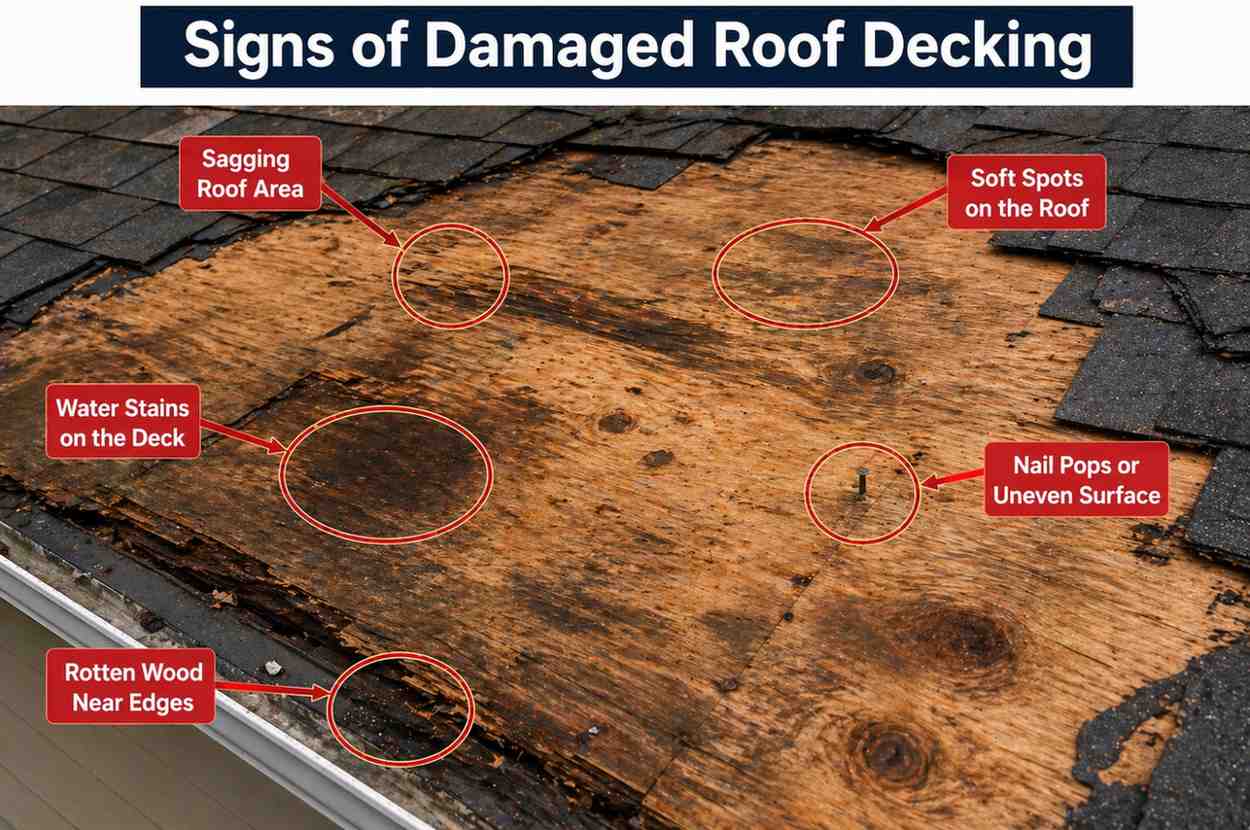
- Sagging roof areas
- Soft spots on the roof
- Leaks in the attic
- Water stains on ceilings
- Mold or mildew in attic spaces
- Missing or loose shingles
- Nail pops or uneven roofing surfaces
- Rotten wood near roof edges
- Musty smell after rain
- Light showing through attic boards
If you notice these signs, do not ignore them. Damaged roof decking can spread and create bigger structural issues if water keeps entering the roof system.
What Causes Roof Decking Damage?
Roof decking usually becomes damaged because of moisture, poor ventilation, age, or roofing problems that were not repaired in time.
Roof Leaks
Leaks are one of the biggest causes of damaged roof decking. When water gets under shingles and reaches the deck, the wood can swell, soften, or rot. Over time, this weakens the roof base.
Poor Attic Ventilation
A roof needs proper airflow. Without ventilation, heat and moisture can build up inside the attic. This can cause condensation on the underside of the roof deck, leading to mold, warping, or wood damage.
Old Roofing Materials
As shingles age, they lose their ability to protect the roof. Cracked, curled, or missing shingles can expose the underlayment and decking to moisture.
Storm Damage
Strong winds, heavy rain, hail, and falling branches can damage roofing materials and allow water to reach the deck. In areas like Maryland and Virginia, storm-related roof damage should be inspected quickly.
Poor Installation
Bad roofing work can shorten the life of the roof deck. Incorrect nailing, poor flashing, weak underlayment, or improper material use can all lead to moisture problems.
Roof Decking vs Roof Sheathing
Many people ask whether roof decking and roof sheathing are the same thing. In most residential roofing conversations, yes, they mean the same thing.
Both terms describe the layer of boards or panels attached to the roof framing. Contractors may use either term. Homeowners may hear “roof sheathing” during inspections or estimates, while “roof decking” is often used in general roofing discussions.
The important thing is not the name. The important thing is whether the material is strong, dry, and properly installed.
When Does Roof Decking Need Replacement?
Roof decking replacement is needed when the wood is no longer strong enough to support the roofing system. This often happens when the deck is rotten, soft, warped, broken, or badly water-damaged.
During roof replacement, a contractor may remove old shingles and discover damaged decking underneath. This is common because some damage stays hidden until the roof covering is removed.
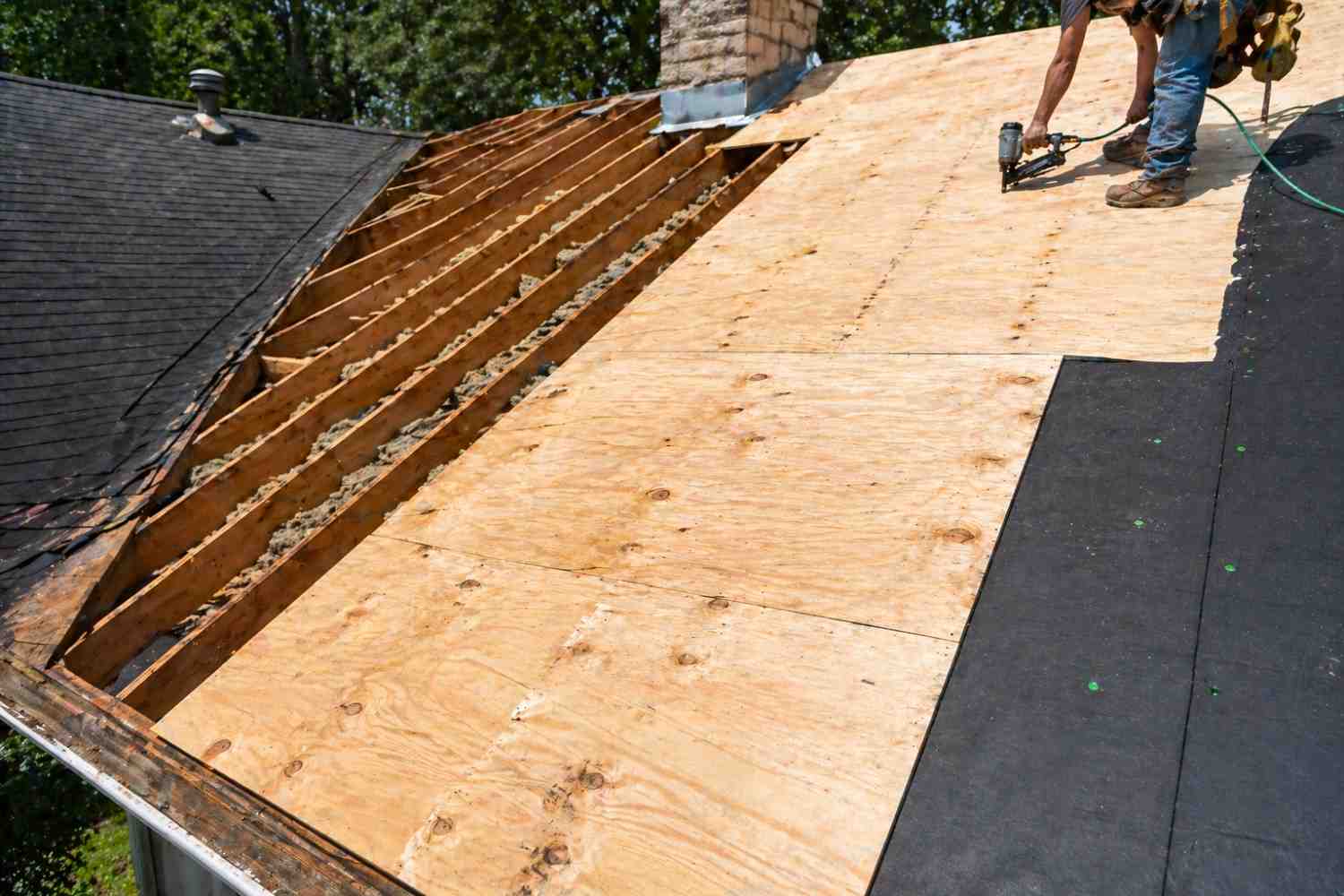
You may need roof decking replacement if:
- The wood feels soft or spongy
- There is visible rot or mold
- The decking has holes or broken sections
- Nails no longer hold properly
- The roof has sagging areas
- Water has damaged the attic side of the deck
Installing new shingles over rotten roof decking is a waste of money. The new roof may look good at first, but it will not have the support it needs.
Roof Decking Inspection
A proper roof decking inspection should check for soft wood, stains, mold, rot, nail holding problems, and sagging areas. The contractor should also look inside the attic because many roof deck issues start underneath, not on the surface.
During roof replacement, the old shingles should be removed so the contractor can see the condition of the decking. If damaged sections are found, they should be replaced before new roofing materials are installed.
How to Protect Roof Decking
You cannot fully control the weather, but you can reduce the risk of roof decking damage with proper roof care.
Helpful steps include:
- Replace missing or damaged shingles quickly
- Keep gutters clean and draining properly
- Make sure attic ventilation is working
- Schedule roof inspections after major storms
- Repair flashing around chimneys and vents
- Watch for attic moisture or ceiling stains
- Avoid delaying roof leaks
Small roof problems become expensive when water reaches the deck. Fast repairs and regular inspections help protect the hidden structure of the roof.
Final Thoughts
Roof decking is one of the most important parts of your roofing system, even though most homeowners never see it. It supports shingles, helps prevent leaks, protects structural strength, and gives the roof a solid base.
If the decking is damaged, rotten, or weak, the entire roof is at risk. New shingles alone cannot fix a bad roof deck. That is why proper inspection, roof deck repair, and roof decking replacement matter when roofing problems appear.
For homeowners in Maryland and Virginia, keeping the roof structure strong is essential for long-term protection. A durable roof is not just about the material you see from the outside. It starts underneath, with strong and properly installed roof decking.
Ready to Transform Your Space?
Contact Us Today!
Get in touch with our team today for trusted service.




Trusted by 50+ businesses across Maryland & Virginia.