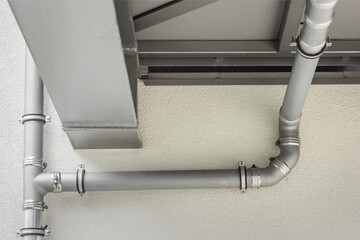
Gutters and downspouts are not just small exterior parts. They are a drainage system that controls rainwater runoff from your roof and moves it away from your home. When this system works well, it protects the roof edge, siding, foundation, basement, landscaping, and exterior walls.
When it fails, water can collect in the wrong places. That can lead to fascia rot, soffit damage, siding stains, basement moisture, soil erosion, mold growth, and foundation problems. These repairs often cost far more than regular gutter maintenance.
For homeowners in Maryland and Virginia, gutters matter even more because homes face heavy rain, seasonal storms, humidity, falling leaves, and freeze-thaw weather. This guide explains how gutters and downspouts protect your home, what warning signs to watch for, and when replacement makes sense.
Quick Answer: What Do Gutters and Downspouts Do?
Gutters collect rainwater from the roofline. Downspouts carry that water down and direct it away from the home. Together, they help stop water from entering places it should not, such as behind gutters, under trim, near basement walls, or around the foundation.
A working gutter system helps prevent:
- Water collecting near the foundation
- Basement leaks and crawl space moisture
- Fascia and soffit rot
- Siding stains and exterior wall damage
- Soil erosion around the home
- Landscape washout
- Mold and mildew near exterior surfaces
- Roof edge and shingle damage
If rainwater spills over the gutter or pools near the foundation, the system is not controlling water correctly.
How Gutters and Downspouts Work Together
Gutters and downspouts work as one system. The gutter catches water as it flows off the roof. The downspout then moves that water toward a safe drainage area away from the house.
For this system to work, the gutter must be clean, properly pitched, and firmly attached. The downspout must also be clear, correctly placed, and long enough to move water away from the foundation.
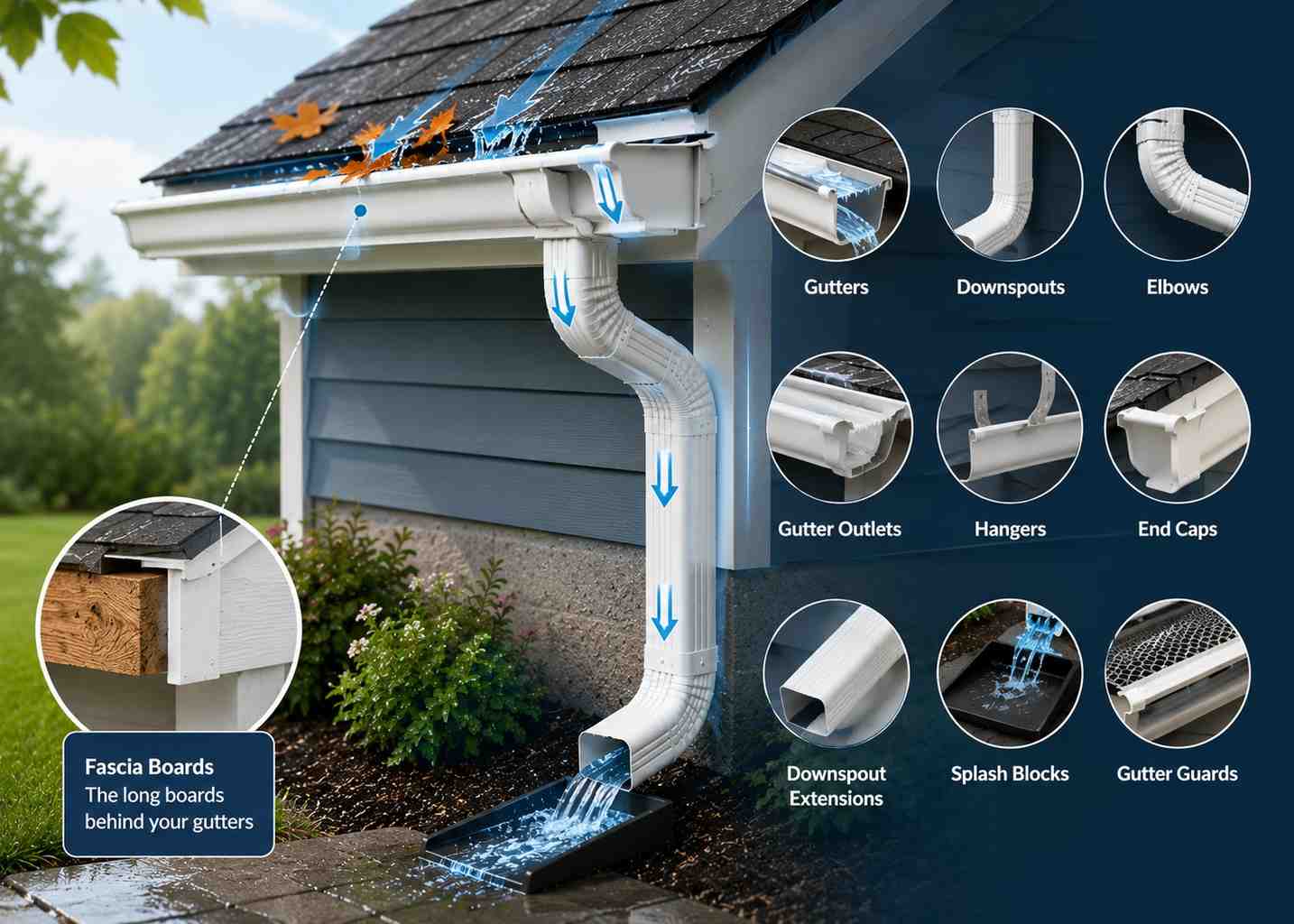
Key parts of the system include:
- Gutters
- Downspouts
- Elbows
- Gutter outlets
- Hangers
- End caps
- Downspout extensions
- Splash blocks
- Gutter guards
- Fascia boards, the long boards behind your gutters
If one part fails, the full drainage system can lose performance.
How Gutters Protect the Roof Edge
Gutters protect the roof edge by collecting water before it falls directly from the shingles. Without gutters, rainwater can run over the edge and damage the boards behind the gutters, the underside of the roof edge, trim, and exterior paint.
Clogged gutters create a similar problem. When water cannot flow through the gutter, it spills over the front or backs up near the roofline. Over time, this can weaken wood, stain exterior surfaces, and create hidden moisture damage.
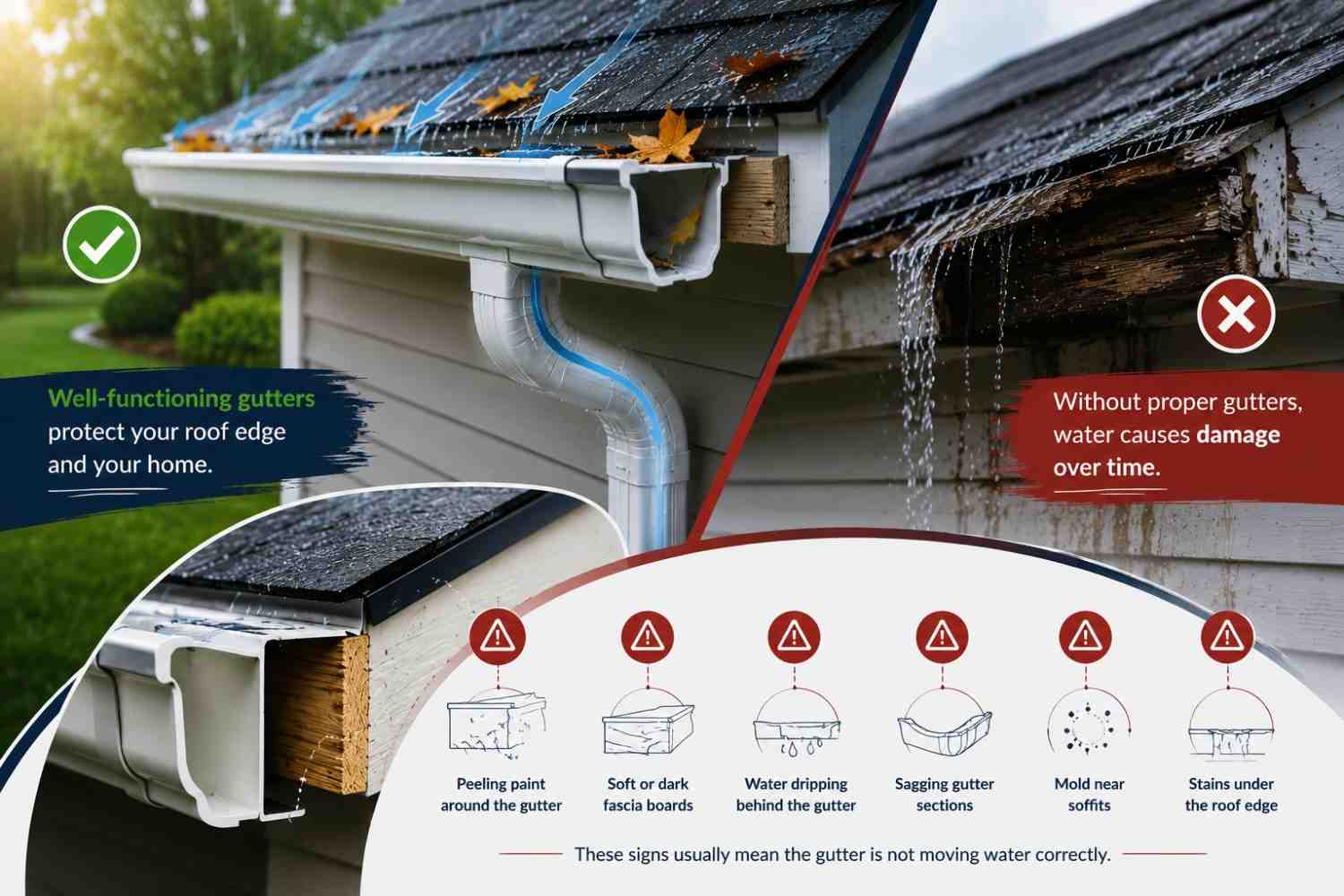
Watch for these signs near the roofline:
- Peeling paint around the gutter
- Soft or dark fascia boards
- Water dripping behind the gutter
- Sagging gutter sections
- Mold near soffits
- Stains under the roof edge
These signs usually mean the gutter is not moving water correctly.
How Downspouts Protect the Foundation
Downspouts protect the foundation by carrying roof water down and away from the house. A clean gutter is helpful, but it cannot protect the home if the downspout ends too close to the foundation.
When water collects beside the house, the soil becomes saturated. Over time, this can create pressure around basement walls, make crawl spaces damp, and cause water problems near the foundation.
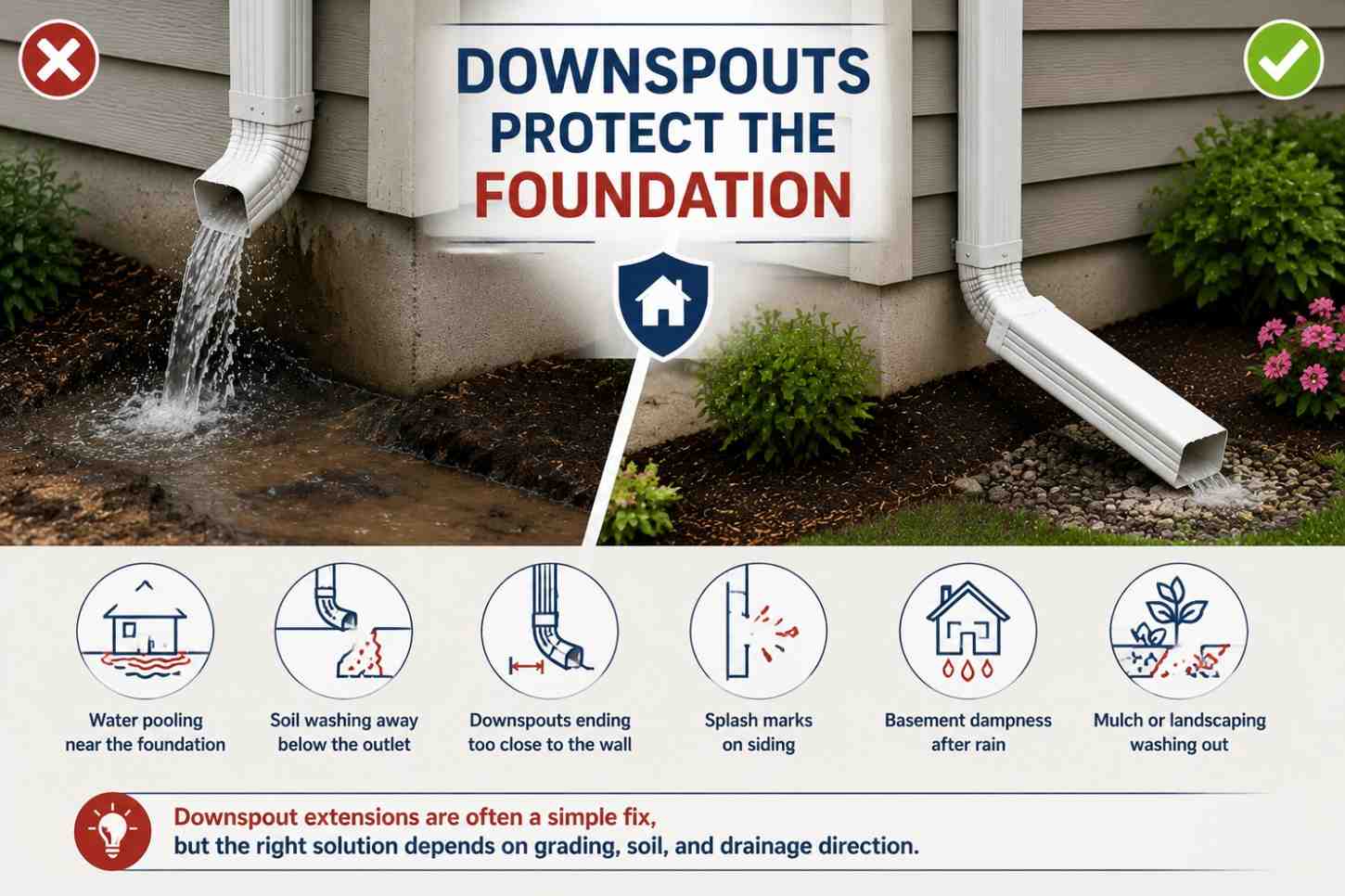
Common downspout issues include:
- Water pooling near the foundation
- Soil washing away below the outlet
- Downspouts ending too close to the wall
- Splash marks on siding
- Basement dampness after rain
- Mulch or landscaping washing out
Downspout extensions are often a simple fix, but the right solution depends on grading, soil, and drainage direction.
Common Gutter and Downspout Problems
Most gutter problems begin small. Leaves collect in one section. A hanger loosens. A downspout outlet clogs. At first, the issue may not look serious, but repeated rain can turn it into costly exterior damage.
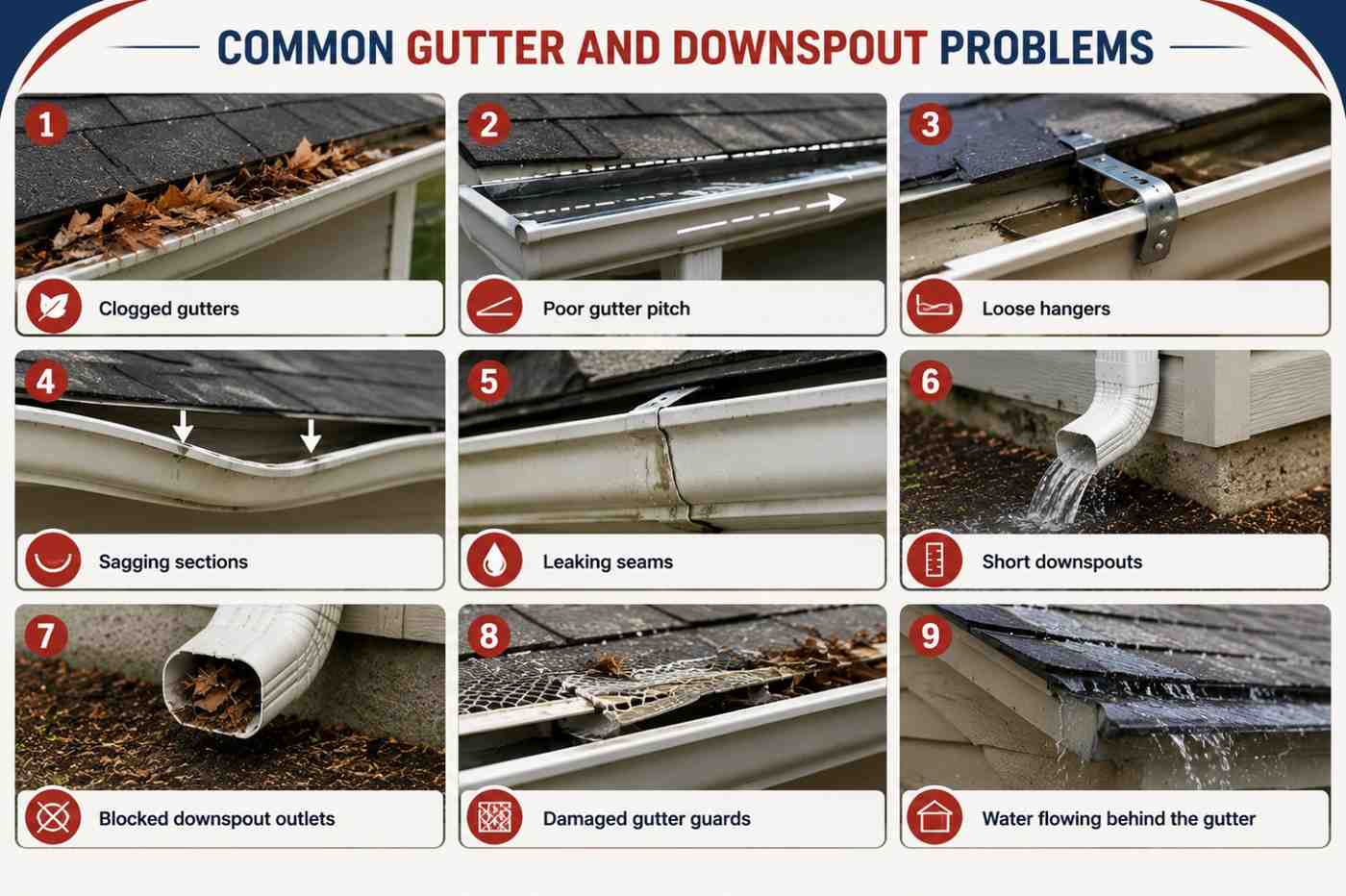
The most common problems include:
- Clogged gutters
- Poor gutter pitch
- Loose hangers
- Sagging sections
- Leaking seams
- Short downspouts
- Blocked downspout outlets
- Damaged gutter guards
- Water flowing behind the gutter
The goal is not only to clean the gutter. The goal is to make sure water moves from the roof to a safe discharge point without backing up, spilling over, or collecting near the home.
Why Maryland and Virginia Homes Need Strong Drainage
Homes in Maryland and Virginia deal with weather conditions that can test gutters, downspouts, and exterior drainage. Heavy rain, summer humidity, winter freeze-thaw cycles, and seasonal leaf buildup can all affect how well gutters and downspouts perform.
In wooded neighborhoods, leaves and small branches can clog gutters faster. In older homes, poor grading may send water back toward the foundation. In storm-prone areas, loose gutters or short downspouts may fail during heavy rainfall.
For homeowners searching for gutter repair in Maryland or gutter replacement in Virginia, the main focus should be exterior water control. A good system should protect the roofline, siding, foundation, and drainage path together.
Signs You Need Gutter Replacement
Gutter replacement may be better when the system has repeated problems or no longer moves water properly. Old, undersized, rusted, or badly sloped gutters can keep causing damage even after cleaning.
Consider replacement if you notice:
- Frequent overflow after cleaning
- Multiple leaks
- Rust or holes
- Gutters pulling away from fascia
- Water running behind the gutter
- Major sagging
- Repeated foundation pooling
- Damaged fascia behind the gutter
If the same problems return after every storm, the gutter system may need more than a quick repair.
Do Gutter Guards Help?
Gutter guards can help reduce debris buildup, especially near trees. They can lower the need for frequent cleaning and help water move more freely during rain.
But gutter guards do not make a gutter system maintenance-free. Leaves, pine needles, roof grit, and small debris can still collect on top of guards or near downspout openings.
Gutter guards work best when:
- Gutters are properly pitched
- Downspouts are clear
- The system is correctly sized
- Roof runoff is not overwhelming the gutter
- The guards match the local debris type
For some homes, gutter guards are useful. For others, better downspout placement or gutter replacement may matter more.
How Often Should Gutters and Downspouts Be Checked?
Most homes should have gutters and downspouts checked at least twice a year. Spring and fall are usually the best times because they follow heavy seasonal debris and weather changes.
Homes near trees may need more frequent cleaning. It is also smart to inspect the system after strong storms, heavy rain, or high winds.
Check for:
- Overflow during rain
- Water stains on siding
- Loose gutter sections
- Blocked downspouts
- Soil erosion below outlets
- Water pooling near the foundation
- Sagging or separated gutters
These checks can help prevent roofline damage, siding issues, and foundation moisture before they become expensive repairs.
Professional Gutter Inspection Matters
Some problems are easy to see from the ground. Others are hidden behind gutters, under roof edges, or inside downspouts. A professional inspection looks at the full drainage path, not just the visible gutter.
A complete inspection should review the roof edge, fascia, soffits, gutter pitch, downspout outlets, drainage direction, exterior trim, and foundation area. This helps identify whether the issue is a simple clog, a repair need, or a larger water management problem.
UD Roofing helps homeowners review gutter and downspout issues as part of exterior water damage prevention in Maryland and Virginia. This is useful when water is affecting the roofline, siding, trim, or foundation area.
Final Thoughts
Gutters and downspouts prevent costly water damage by controlling where roof water goes. A clean, well-installed system protects the roof edge, siding, exterior walls, landscaping, basement, and foundation.
The biggest mistake is waiting until visible damage appears. Overflow, poor pitch, short downspouts, and clogged outlets can create hidden problems long before major repairs are obvious.
If your gutters leak, overflow, sag, or send water toward the house, it is time to inspect the system. Proper drainage is one of the simplest ways to protect your home from expensive moisture damage.
FAQs
What happens if gutters are clogged?
Clogged gutters can overflow, push water behind the gutter, stain siding, damage fascia boards, and send water toward the foundation.
How far should downspouts drain from the house?
Downspouts should move water far enough away that it does not collect near the foundation. The right distance depends on grading, soil type, and drainage conditions around the home.
Do gutter guards stop all gutter problems?
No. Gutter guards reduce debris buildup, but gutters and downspouts still need inspection. Outlets can clog, guards can collect debris, and water flow can still be affected.
When should gutters be replaced?
Gutters may need replacement if they have repeated leaks, rust, holes, major sagging, poor pitch, or constant overflow even after cleaning.
Ready to Transform Your Space?
Contact Us Today!
Get in touch with our team today for trusted service.




Trusted by 50+ businesses across Maryland & Virginia.