Roof leaks usually begin with small issues that are easy to miss. A blocked gutter, damaged shingle, weak flashing, poor roof ventilation, or aging roof material can slowly allow moisture into the home.
The best steps to prevent roof leaks include keeping gutters clear, checking shingles, inspecting flashing, trimming nearby branches, watching for attic moisture, and scheduling a professional roof inspection when warning signs appear.
These simple habits can help prevent water damage, protect your roof system, and give you a clearer idea of when roof replacement may be the better long-term solution.
Why Roof Leak Prevention Matters
Roof leak prevention matters because water damage can spread before you notice it inside your home.
A small roof opening can allow moisture into the attic, insulation, drywall, or wood framing. Over time, this can lead to stains, soft spots, mold risk, and structural concerns.
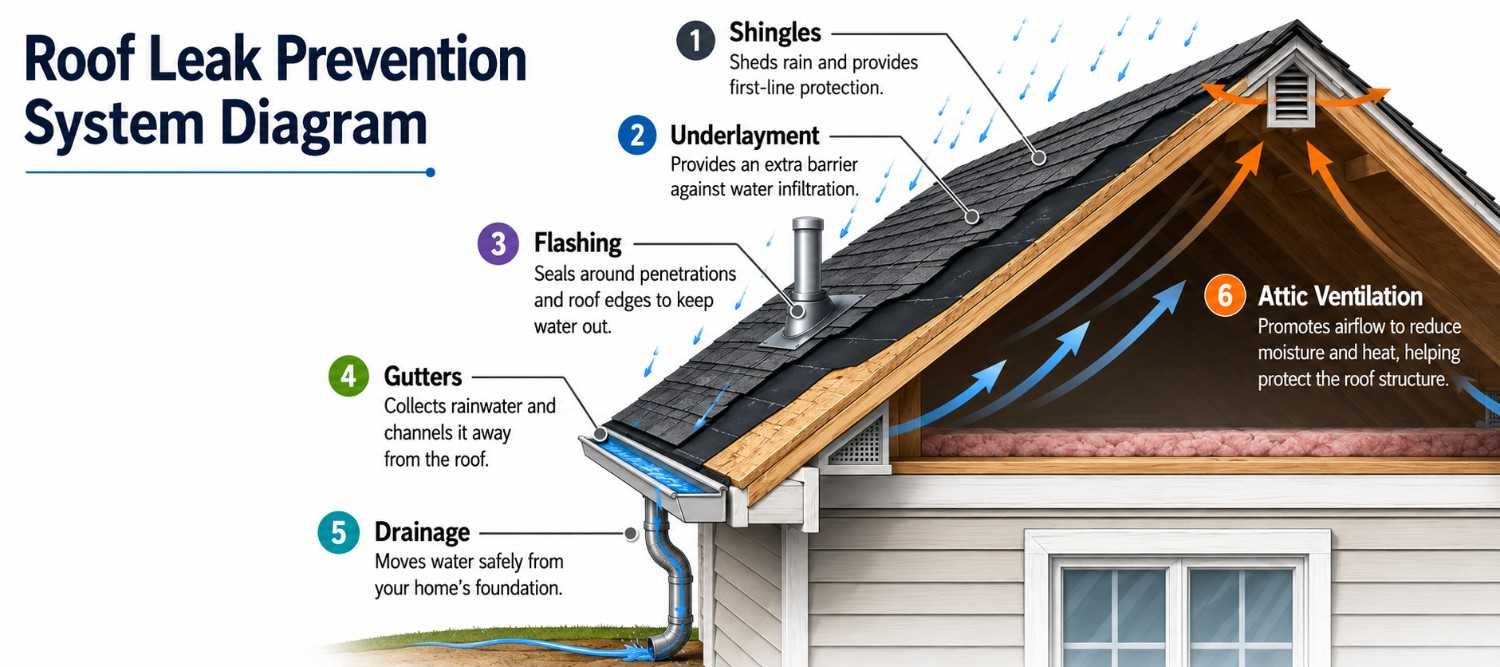
A roof is not just shingles. It is a full system that includes:
- Shingles
- Underlayment
- Flashing
- Gutters
- Roof ventilation
- Drainage
- Attic airflow
When one part fails, the rest of the system can become vulnerable.
For example, clogged gutters can force water back toward the roof edge. Damaged shingles can expose the underlayment. Weak roof flashing can allow water around chimneys, vents, skylights, and roof joints.
That is why prevention is always better than waiting for visible water stains on ceiling surfaces.
Steps to Prevent Roof Leaks Before They Start
The following steps can help homeowners reduce leak risks and protect the roof long term. Most leaks begin with small issues, so regular checks can prevent bigger problems later.
1. Keep Gutters and Downspouts Clear
Clogged gutters can cause rainwater to overflow, collect near the roof edge, or move under lower shingles. Over time, this can affect fascia boards, soffits, siding, roof edges, and foundation areas.
Clean gutters at least twice a year and after heavy storms. Also check for sagging sections, loose fasteners, standing water, or downspouts that drain too close to the home.
2. Check for Missing, Cracked, or Curling Shingles
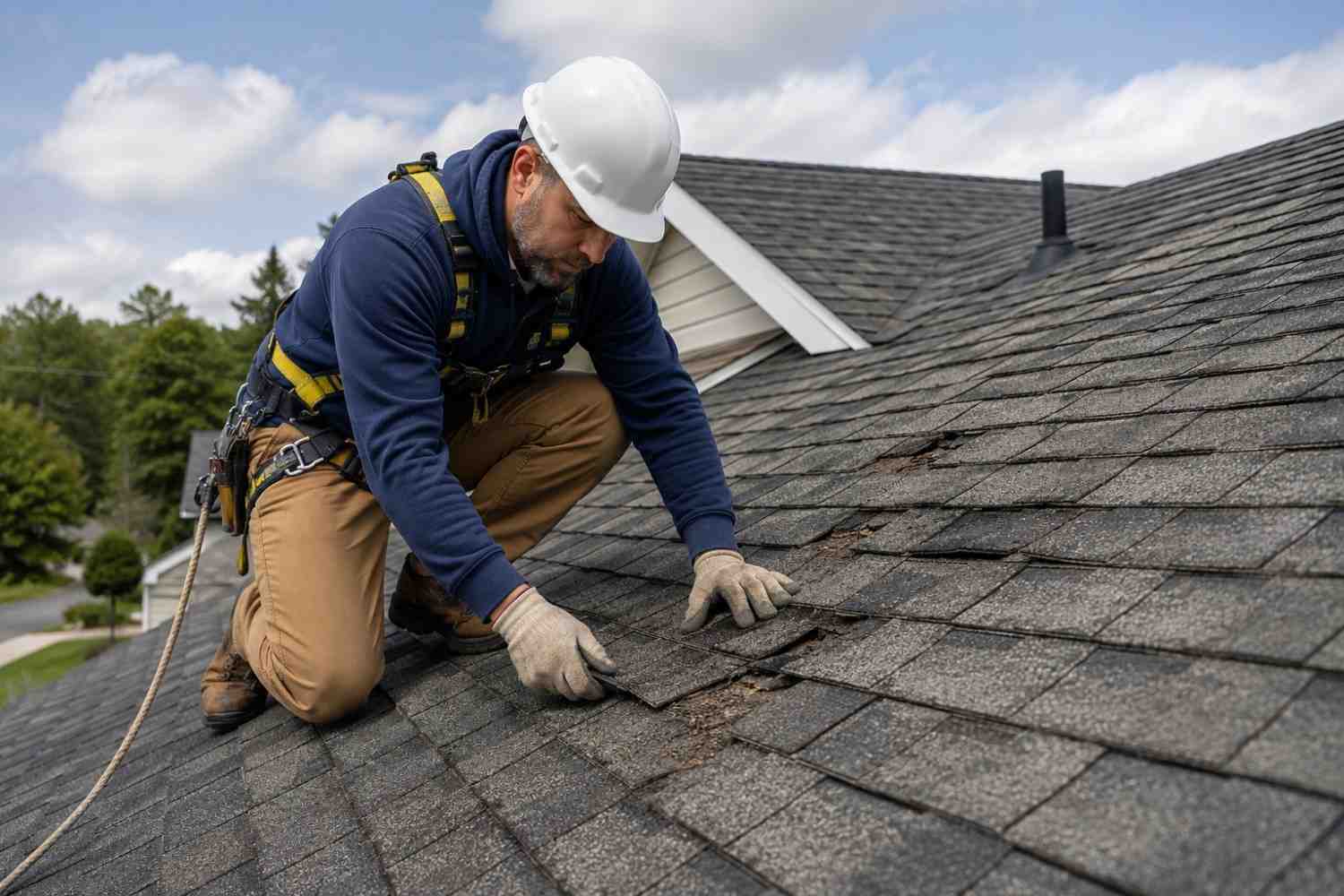
Shingles protect the roof from rain, wind, and sun exposure. When shingles are missing, cracked, loose, or curling, water can reach the layers underneath and weaken the roof system.
Look from the ground for missing shingles, lifted edges, bare spots, or excess granules in the gutters. If damage is widespread or the roof is old, roof replacement may be more practical than repeated short-term fixes.
3. Inspect Flashing Around Chimneys, Vents, and Skylights
Flashing protects leak-prone areas where the roof meets another surface or where something passes through the roof. This includes chimneys, vents, skylights, roof valleys, dormers, and wall connections.
If flashing is loose, rusted, cracked, or poorly installed, water may enter around these openings. Stains near fireplaces, skylights, or roof penetrations should be checked by a roofing professional.
4. Trim Tree Branches Near the Roof
Tree branches that touch or hang over the roof can scrape shingles, drop debris, and block gutters or roof valleys. They can also keep shaded roof areas damp for longer.
Trim branches back when they are too close to the roof. For tall trees or large branches, use a professional tree service instead of taking safety risks yourself.
5. Watch for Attic Moisture and Poor Ventilation
Not every moisture problem comes from outside rain. Poor attic ventilation can trap warm, moist air and affect insulation, roof decking, and the underside of the roof.
Look for damp insulation, musty smells, dark spots on wood, rusted nails, condensation, or mold-like growth. During roof installation or roof replacement, attic ventilation should always be reviewed.
6. Look for Ceiling Stains and Interior Warning Signs
Ceiling stains are often one of the first signs of a moisture problem. They may appear as yellow, brown, or dark patches and may become more visible after rain.
Other warning signs include peeling paint, bubbling drywall, musty odors, damp insulation, soft ceiling spots, or moisture near exterior walls. The source should be checked quickly before hidden damage spreads.
7. Schedule Professional Roof Inspections
A professional roof inspection can find issues that are not easy to see from the ground. This includes damaged shingles, weak flashing, roof valley problems, gutter issues, poor drainage, and ventilation concerns.
Inspections are especially useful after severe weather, when ceiling stains appear, when the roof looks worn, or when you are planning roof replacement. A good inspection helps you understand whether the roof needs basic attention or a larger long-term solution.
Roof Leak Prevention Checklist
Use this checklist to keep roof maintenance simple and organized.
| Prevention Step | What to Check | Why It Matters | How Often to Review |
|---|---|---|---|
| Gutters and downspouts | Leaves, debris, sagging, blocked drainage | Helps prevent water from backing up near roof edges | Twice a year and after storms |
| Shingles | Missing shingles, damaged shingles, curling, cracking | Protects the roof from direct moisture exposure | Seasonally and after high winds |
| Roof flashing | Chimneys, vents, skylights, valleys, wall joints | Protects common leak-prone areas | During inspections or when stains appear |
| Attic ventilation | Damp insulation, musty smells, trapped heat | Helps control moisture inside the roof system | A few times per year |
| Tree branches | Branches touching or hanging over the roof | Reduces scraping, debris, and damp shaded areas | As trees grow or after storms |
| Interior warning signs | Water stains, peeling paint, damp drywall | Helps detect hidden moisture early | Whenever new marks appear |
| Roof age | Widespread wear, repeated leaks, sagging areas | Shows when replacement may be needed | Review yearly as the roof gets older |
When Prevention Is Not Enough
Prevention helps protect your roof, but it cannot fix a roof that is already failing.
Some roofs are too old, too worn, or too poorly installed to perform well long term. In those cases, maintenance may only delay the same problems from returning.
Warning signs that prevention may not be enough include:
- Repeated leaks
- Widespread shingle damage
- Sagging roof areas
- Recurring attic moisture
- Multiple ceiling stains
- Large sections of worn roofing material
- Previous poor roof installation
Minor leak repairs may require a repair specialist. But if the roof has repeated problems, widespread damage, or age-related deterioration, roof replacement may be the better long-term solution.
United Developers provides roofing services for homeowners in Maryland and Virginia. If your roof is aging or showing repeated roof damage signs, a replacement evaluation can help you understand whether a new roofing system is the smarter option.
Can a New Roof Help Prevent Future Leaks?
Yes, a properly installed new roof can help reduce future leak risks by replacing worn materials and correcting old installation or ventilation problems.
A strong roof system includes quality shingles, underlayment, flashing, drainage, ventilation, and careful installation around chimneys, vents, and roof valleys.
A new roof still needs regular maintenance, but it gives your home a stronger foundation for long-term protection.
Common Mistakes Homeowners Should Avoid
Many roof leaks become worse because small warning signs are ignored. A small stain, blocked gutter, or loose shingle may not seem urgent at first, but repeated moisture can create bigger problems.
Homeowners should avoid:
- Ignoring small water stains
- Letting gutters stay blocked
- Walking on the roof without proper safety
- Covering stains without finding the source
- Delaying inspection after storm damage
- Waiting too long to replace an aging roof
The biggest mistake is treating repeated roof problems as separate issues. If the same area keeps showing moisture, or if several parts of the roof are wearing down, the full roof system may need attention.
Frequently Asked Questions
How often should homeowners inspect their roof?
Homeowners should visually check the roof a few times a year and after major storms. Older roofs or roofs with visible wear may need professional inspection more often.
Can clogged gutters cause roof leaks?
Yes. Clogged gutters can cause water to back up near the roof edge. This may affect lower shingles, fascia, soffits, and nearby exterior areas.
When should a roof be replaced instead of repaired?
A roof may need replacement when there are repeated leaks, widespread shingle damage, sagging areas, poor installation, or age-related deterioration. Minor leak repairs may require a repair specialist, but system-wide problems often point toward replacement.
Does proper roof installation help prevent leaks?
Yes. Proper roof installation helps reduce leak risks by using the right underlayment, flashing, ventilation, drainage, and shingle placement. A roof installed as a complete system is more likely to protect the home long term.
Final Thoughts
The most effective steps to prevent roof leaks are simple, but they work best when done consistently. Keep gutters clear, check shingles, inspect flashing, trim nearby trees, watch for attic moisture, and schedule a professional roof inspection when warning signs appear.
These steps can help prevent water damage and protect your home long term. They also help you understand whether your roof needs basic attention, professional evaluation, or a larger replacement plan.
If your roof is aging, poorly installed, or repeatedly showing leak warning signs, roof replacement may be the better long-term solution. A strong roof starts with proper installation, reliable materials, good ventilation, and regular care.
Ready to Transform Your Space?
Contact Us Today!
Get in touch with our team today for trusted service.




Trusted by 50+ businesses across Maryland & Virginia.