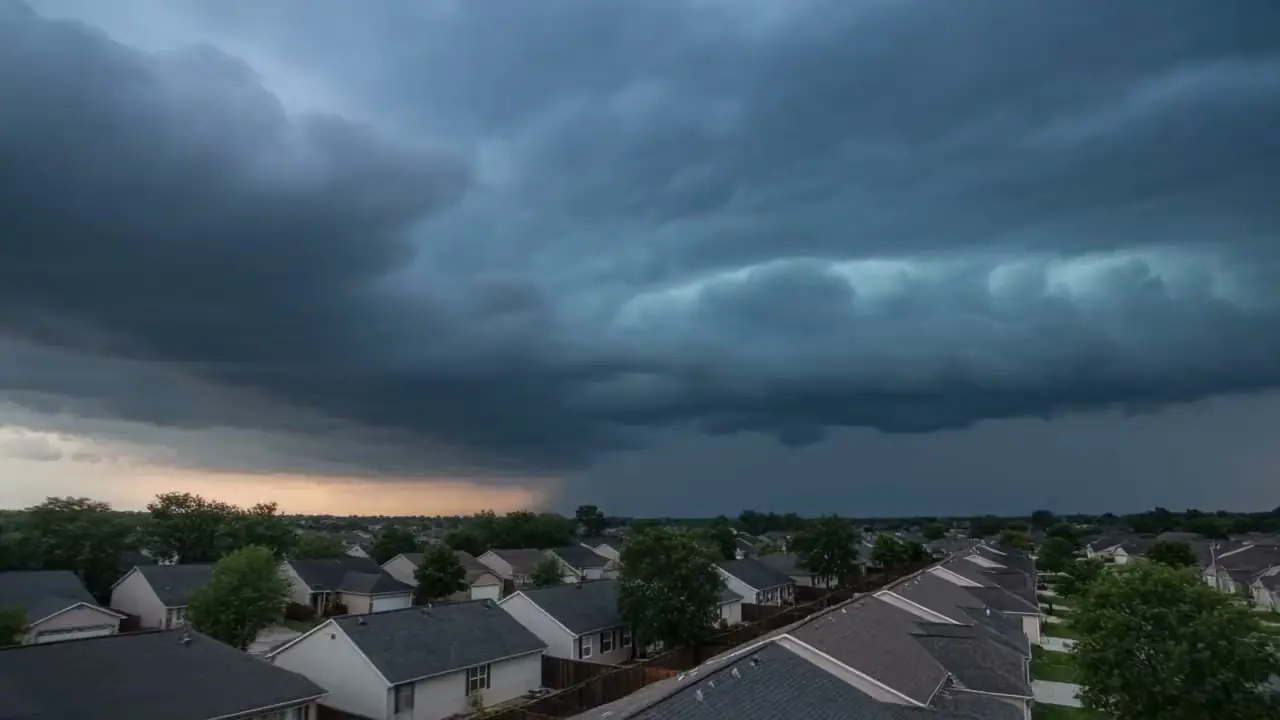
Storm & hail damage on DMV roofs: how to spot it before it leaks
After almost every Mid-Atlantic hailstorm, thousands of homeowners assume their roof is fine because nothing looks wrong from the yard. That assumption is exactly how a covered insurance claim quietly turns into an out-of-pocket leak a year later. Here's what hail and wind actually do to a roof, the signs that matter, and what to do next.
What hail and wind actually do to a roof
An asphalt shingle is a mat saturated with asphalt and armored by ceramic granules. Those granules are the sunscreen — they protect the asphalt from UV. When hail strikes, it knocks granules loose and bruises the mat underneath. There's often no hole, no missing shingle, nothing visible from the ground. But the bruise is a soft spot where the asphalt is now exposed and aging fast. Within a few seasons it cracks, and water finds the deck.
Wind does its damage differently. Gusts over about 60 mph lift and crease shingles, breaking the factory seal that bonds each course to the one below. The shingle often lies back down and looks normal — but the seal is broken, and the next storm peels it. This is why a roof can "pass" a glance from the driveway and still be compromised.
Seven signs of storm damage worth checking
- Granules in the gutters or at downspout splash blocks — like coarse black sand. Heavy granule loss after a storm is a red flag.
- Bruises or dimples on shingles — soft spots you can feel, often with the granules knocked off in a circular pattern.
- Dented or dinged metal — gutters, downspouts, vents, flashing, and especially the soft aluminum of a roof vent or AC unit. Hail that dents metal dented your shingles too.
- Creased or lifted shingles — a horizontal crease line means the shingle was folded back by wind and reseated.
- Cracked or missing shingles after a wind event.
- Damaged ridge cap or boots — the most exposed parts fail first.
- Interior clues — fresh water stains on a ceiling or in the attic after a storm, even small ones.
Safety first: don't climb on your own roof to check. Storm-damaged shingles are slick and fragile, and most homeowner falls happen on a ladder. A free professional inspection is safer and more thorough.
Free inspection, typically within 24 hours + full photo report — free.
A licensed inspector documents your whole roof and you keep the report either way, at no cost. No pressure, no sales script.
Book My Free Inspection →What to do after a storm — in order
1. Document the date
Note the day the storm hit and your county. Insurance claims are tied to a specific storm date, and adjusters cross-reference weather data. We track National Weather Service hail and wind reports across Maryland and Virginia, so we can confirm whether a qualifying event crossed your ZIP.
2. Get a professional inspection before you call your insurer
This order matters. A reputable roofer inspects for free and tells you honestly whether you have real, claimable damage. If you call your insurer first and an adjuster finds nothing, you've used a claim for nothing. If a roofer documents genuine storm damage first, your claim stands on evidence.
3. We document the damage and meet your adjuster
Once damage is documented, You file the claim with your carrier; United Developers documents the damage and meets your adjuster on the roof to walk through our photo report and estimate. On approved storm claims, your deductible is typically your out-of-pocket cost on an approved claim while insurance covers the replacement.
The clock is your enemy
Hidden hail damage doesn't announce itself, but your policy still sets a deadline for reporting a loss. Most Maryland policies require prompt notice — read your own policy for the exact wording — and the longer a homeowner waits, the harder it becomes to show the damage came from a specific storm rather than ordinary wear. A dated inspection report preserves that evidence. Coverage decisions are always your insurer's to make. The roof that looks fine today is the roof a year of freeze-thaw cycles turns into a leak — after your coverage for it has expired. If a storm has crossed your area in the last several months, the only cost-free move is to get it documented now.
Bottom line: a free 24-hour inspection costs you nothing and either gives you peace of mind or catches a covered claim before it expires. There is no downside to knowing.