Reviewed by Mohammad KhanCo-owner, United DevelopersMHIC #111971
What separates a cheap shingle from an expensive one?
Structure and tested ratings. Asphalt shingles come in three broad classes: 3-tab, which is a single flat layer; architectural or dimensional, which is laminated from two or more layers and is the mainstream choice today; and designer or luxury, which are heavier multi-layer profiles imitating slate or shake. What separates them on paper is not adjectives but standards — Class A fire under ASTM E108 or UL 790, wind class under ASTM D3161 or D7158 where Class F corresponds to 110 mph and Class H to 150 mph, and impact resistance under UL 2218 in Classes 1 to 4, where Class 4 means a two-inch steel ball dropped twice on the same spot leaves no crack. In a hail-and-wind market, the impact class and the wind class are the two numbers worth arguing about.
The three classes of asphalt shingle
Nearly every asphalt shingle sold is built the same way: a fibreglass mat, saturated and coated with asphalt, surfaced with ceramic-coated mineral granules that carry the colour and take the UV hit so the asphalt does not. What differs is how many layers are laminated together, how heavy the result is, and what it was tested to withstand.
| 3-tab | Architectural / dimensional | Designer / luxury | |
|---|---|---|---|
| Construction | One flat layer with cutouts forming three tabs. | Two or more layers laminated together, giving a varied profile. | Heavier multi-layer profiles, often shaped to imitate slate or wood shake. |
| How it reads | Flat and uniform. Clearly a budget roof at close range. | Depth and shadow lines. The mainstream premium look. | Deep relief, larger exposure, distinct silhouette. |
| Weight per square | Lightest. | Substantially heavier than 3-tab. | Heaviest of the three. |
| Wind classes available | Generally the lowest classes on offer. | Higher classes widely available with the specified fastening. | Higher classes available; check the specific product. |
| Impact-rated versions | Rare. | Class 4 available in specific product lines. | Class 4 available in specific product lines. |
| Where it makes sense | Rentals, outbuildings, tight budgets, matching an existing roof. | Almost every DMV re-roof. The default. | Architecturally significant houses and steep visible slopes. |
The four ratings worth reading
| Rating | Standard | What is actually tested | What to ask for |
|---|---|---|---|
| Impact resistance | UL 2218, Classes 1 to 4 | Steel balls of increasing diameter dropped onto the shingle. Class 4, the highest, uses a two-inch ball dropped twice on the same spot with no cracking of the mat. | The class, in writing, plus the manufacturer’s documentation for the specific product. |
| Wind resistance | ASTM D3161 (Classes A, D, F) and ASTM D7158 (Classes D, G, H) | Uplift performance of the assembly. Class F corresponds to 110 mph; Class H to 150 mph. | The class AND the fastener pattern it requires — the rating is a property of the assembly. |
| Fire resistance | ASTM E108 / UL 790, Classes A, B, C | Flame spread and burning-brand resistance of the roof covering. Class A is the highest. | Class A. Most fibreglass-mat asphalt shingles achieve it; confirm rather than assume. |
| Algae resistance | Manufacturer product designation, not a public test class | Not a rating so much as a formulation: copper or zinc in the granule blend inhibits algae growth. | Whether the product line you are quoted includes the algae-resistant granule blend. |
A wind class is not a property of the shingle
This is the single most misused number in roof sales. A published wind class comes from a tested assembly: that shingle, that fastener count, fasteners in the designated nailing zone, and the specified starter at the perimeter. Quote a 130 mph shingle, install it with four nails and no rake starter, and the number on the wrapper no longer describes the roof on the house. The rating and the fastening pattern belong on the same line of the same document. See starter, hip and ridge components.
Class 4 impact resistance, and what it does and does not buy
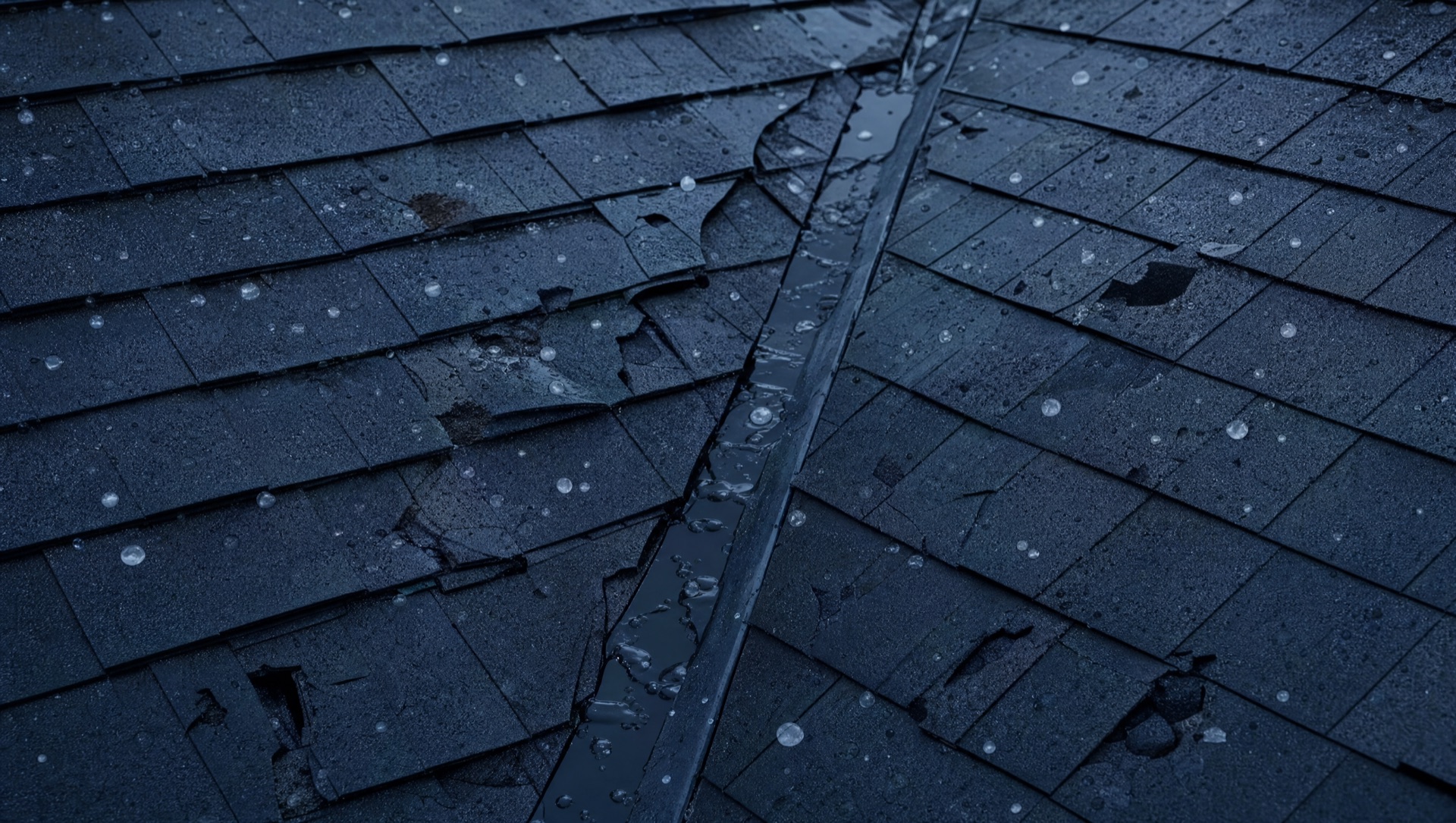
UL 2218 is a drop test. Steel balls of increasing diameter are dropped from a set height onto a shingle assembly; the sample passes a class if the mat shows no cracking after two impacts on the same spot. Class 4 is the top class and uses a two-inch ball. It is a genuine physical difference: Class 4 products are typically built with a modified, more elastic asphalt formulation or an additional reinforcing layer, so the mat deforms instead of fracturing.
What it does buy
- A meaningfully better chance that a hailstone leaves a bruise rather than a fracture in the mat
- Fewer functional failures after a marginal hail event, which is the kind the DMV gets most often
- Documentation. A Class 4 designation is written down, tied to a product, and verifiable
What it does not buy
- Immunity. Large hail damages Class 4 roofs. The test is two impacts of a two-inch ball, not a storm.
- A cosmetic guarantee. Granule loss and marking can still occur; the class is about the mat, not the surface appearance.
- An automatic insurance discount. Some carriers offer a premium credit for an impact-rated roof and some do not, and the terms vary by carrier and by state. Ask your own carrier before you assume, and keep the manufacturer documentation for the product installed.
On hail claims generally: whether damage is covered, and how, is your insurer’s determination. What a contractor can properly do is document the condition thoroughly and submit it. On an approved claim, your deductible is typically your out-of-pocket cost, as determined by your policy and carrier. See the storm and hail damage guide and the claim process.
Two things worth unlearning
A "30-year shingle" is not a 30-year roof
The number in a shingle’s name is, and always was, a warranty term. It describes a period of coverage against manufacturing defects with a defined proration schedule — it is not a prediction of service life, and it never came with one. Real-world service life is set by the things this whole section of the site is about: ventilation, deck condition, fastening, flashing and the weather the roof actually gets. Which is why most manufacturers now use the phrase limited lifetime instead of a number, and why reading the actual warranty matters more than reading the name.
Those black streaks are not dirt, mould or wear
The dark vertical streaking on Mid-Atlantic roofs is algae — Gloeocapsa magma — living on the moisture held in the shingle surface. It is a cosmetic condition and not a structural one: a streaked roof is not a failing roof. It is more visible on north-facing and shaded slopes, and it is the reason algae-resistant granule blends containing copper or zinc exist. What it is not is a reason to pressure-wash an asphalt roof, which strips granules and can void coverage. If a salesperson uses streaking as evidence you need a replacement, that tells you about the salesperson.
What we specify, and why
A shingle is named by manufacturer, product line, colour and rating
Four identifiers, all of which fit on one line, and any of which is missing on most quotes homeowners bring us.
- Manufacturer and product line named — not "architectural shingles"
- Colour and blend stated, chosen from a physical board in daylight
- Wind class stated together with the fastener pattern it requires
- Impact class stated where an impact-rated product is specified
- Algae-resistant granule blend confirmed for the product line
- Matching system accessories — starter, hip and ridge, underlayment, ventilation
- Manufacturer documentation handed over at closeout, with the product and colour on it
- Warranty registration filed, so the coverage you were sold actually exists
How to tell whether a contractor is cutting this corner
A category covering an enormous price and quality range. It commits the contractor to nothing.
Ask instead: which manufacturer, which product line, which colour.Only as an assembly. Without the specified fastener count, nailing zone and starter, the published class does not describe your roof.
Ask instead: what fastener pattern does that class require, and is it in the scope?A real and valuable designation — which means it comes with paperwork tied to a specific product.
Ask instead: for the manufacturer documentation naming the product and its UL 2218 class.That number is a warranty term with a proration schedule, not a service life. It never predicted how long the roof would last.
Ask instead: to see the actual warranty document, including the ventilation conditions.Dark streaking is algae, and it is cosmetic. It is not evidence of structural failure and it is not a reason to replace a sound roof.
Ask instead: show me the functional damage, in photographs.Premium credits for impact-rated roofs exist with some carriers and not others, and no contractor controls them.
Ask instead: nothing — ask your own carrier, in writing, before you count on it.Shingle questions DMV homeowners ask
What is the difference between 3-tab and architectural shingles?
Structure. A 3-tab shingle is a single flat layer with cutouts that form three tabs, so it reads as a uniform surface and is the lightest and least expensive option. An architectural or dimensional shingle is laminated from two or more layers, which makes it heavier, gives it depth and shadow lines, and generally allows higher tested wind classes with the specified fastening. Impact-rated Class 4 products are common in architectural lines and rare in 3-tab. For almost every Maryland re-roof, architectural is the sensible default.
What is a Class 4 impact-resistant shingle?
Class 4 is the highest of the four impact classes under UL 2218, which is a drop test: steel balls of increasing diameter are dropped onto the shingle, and a sample passes a class if the mat shows no cracking after two impacts on the same spot. Class 4 uses a two-inch ball. Products that achieve it are typically built with a more elastic modified asphalt or an extra reinforcing layer so the mat deforms instead of fracturing. It is a real physical difference, and it is documented per product — ask for the manufacturer paperwork rather than the phrase.
Will an impact-resistant roof lower my insurance premium?
Sometimes, and it depends entirely on your carrier. Some insurers offer a premium credit for a documented impact-rated roof and some do not, and the terms differ by carrier and by state. No contractor controls that decision, so treat any promise of a specific discount with suspicion. What you can do is confirm the credit with your own carrier in writing before you decide, and keep the manufacturer documentation naming the product and its UL 2218 class for the file.
Does a 30-year shingle last 30 years?
No, and it was never meant to. The number in a shingle name is a warranty term describing a coverage period against manufacturing defects with a proration schedule, not a prediction of service life. Actual service life is set by ventilation, deck condition, fastening, flashing quality and the weather the roof gets — which is why the same product can reach thirty years on one house and be finished in eighteen on another. It is also why most manufacturers now say limited lifetime rather than printing a number.
What causes the black streaks on my roof, and do they mean it is failing?
They are algae, Gloeocapsa magma, growing on moisture held at the shingle surface. It is a cosmetic condition, not a structural one, and it shows up first on north-facing and shaded slopes. A streaked roof is not a failing roof. Algae-resistant shingles use copper or zinc in the granule blend to inhibit it. What you should not do is pressure-wash an asphalt roof to remove it, because that strips granules and can affect your warranty coverage. If someone uses streaking as the reason you need a replacement, ask them to show you functional damage in photographs instead.
Where to go next
You now know what to specify. The last piece is what happens if something goes wrong — and which of the two warranties on your roof would actually apply.
What a roof warranty actually covers
Manufacturer versus workmanship, what limited lifetime means, and the exclusions that surprise people.
Read the standard →ColourBest roof shingle colours for Maryland homes
What pairs with brick versus siding, resale and heat considerations, and a tool to see any colour on your house.
Read the guide →ServiceRoof replacement in Maryland
GAF Certified installation with the product line, colour and ratings named in the scope.
See the service →ToolInstant satellite roof quote
Your roof measured from above, priced at current DMV rates.
Price my roof →The serviceRoof replacement
GAF architectural shingle or standing-seam metal, full tear-off, corrected ventilation, and a written line-item price first.
See the service →