Does homeowners insurance cover roof replacement in Maryland?
Short answer: yes — if a covered peril like hail or wind caused the damage, your Maryland homeowners policy typically pays to repair or replace the roof, and on an approved claim your deductible is typically your out-of-pocket cost. The catch is in the details, and a few of them decide whether you get a full new roof or a denial.
When insurance covers it (and when it doesn't)
Covered: sudden, accidental damage from a storm — hail bruising, wind-creased or torn shingles, a tree limb through the deck. Not covered: gradual wear, age, poor maintenance, or pre-existing damage. This is the single most important distinction, and it's why you document a specific storm date and get the damage inspected promptly — wait too long and a covered claim gets reclassified as "wear and tear."
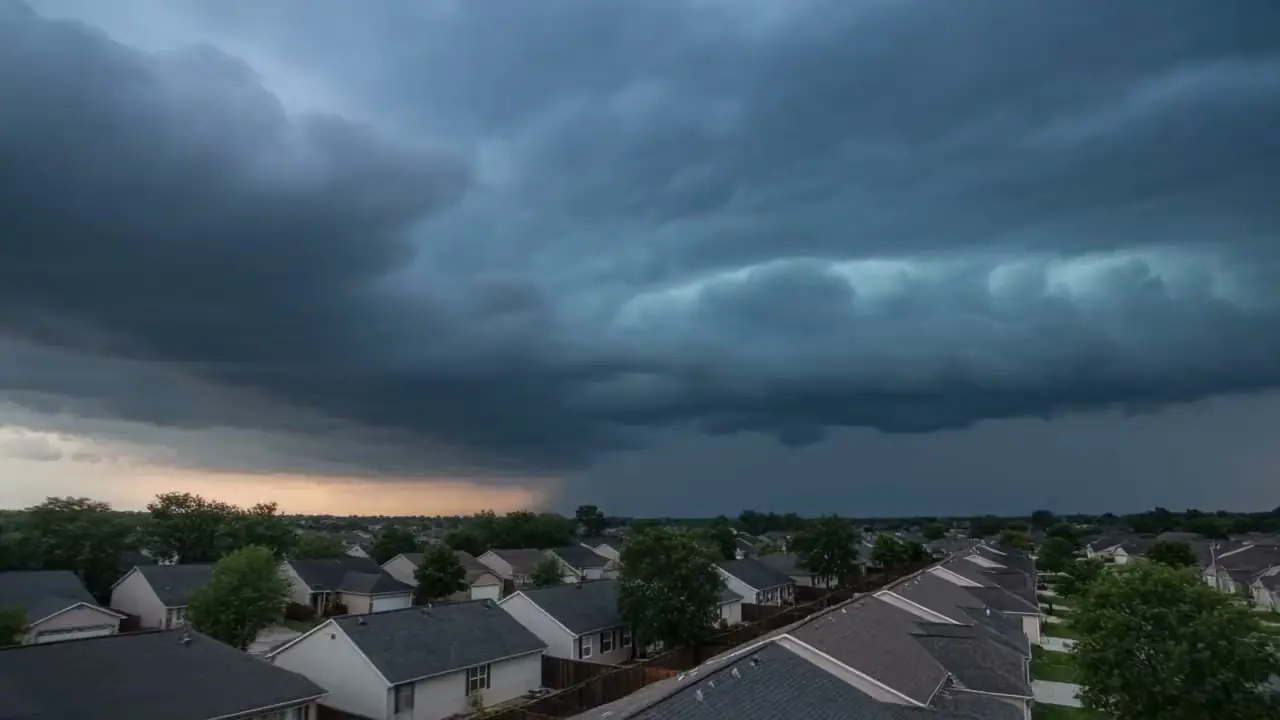
Maryland sits in a corridor that regularly sees spring and summer hail, straight-line thunderstorm winds, remnants of tropical systems, and the occasional nor'easter — all named perils on a standard HO-3 homeowners policy. Covered roof losses usually trace to one of these events: hail that fractures the asphalt mat and knocks off the protective granules, wind that lifts, creases, or tears shingles, or debris impact from a downed limb. What a policy will not pay for is the slow decline every roof eventually faces — curling and cracking from age, blistering, algae staining, or leaks from deferred maintenance. Because the line between storm damage and normal wear is exactly where claims are won or lost, tying your damage to a specific, verifiable storm date is the single most valuable thing you can do early.
RCV vs. ACV — the number that decides your out-of-pocket
- RCV (Replacement Cost Value): pays full replacement cost minus your deductible; the depreciated portion is released after the work is done. Most modern policies.
- ACV (Actual Cash Value): pays the depreciated value only — a bigger gap you cover. Common on older roofs or stripped-down policies.
Find these on your declarations page before you file. It changes the math entirely.
Your deductible — flat dollar vs. percentage
Every approved claim comes down to one number you actually pay: your deductible. Maryland policies use one of two structures, and it pays to know which you carry before a storm hits.
- Flat-dollar deductible — a fixed amount such as $1,000 or $2,500 that applies to the loss. Simple and predictable.
- Percentage (wind/hail) deductible — a percentage of your dwelling coverage, often 1%–2%, sometimes applied only to wind and hail losses. On a $400,000 dwelling a 2% wind/hail deductible is $8,000 — a very different number than a flat $1,000.
Your declarations page spells out which applies. If you carry a percentage deductible, factor that in when deciding whether to file. Either way, on an approved storm claim your out-of-pocket is the deductible and insurance covers the balance up to your policy limits. You can see your options or get an instant roof quote to understand the numbers up front.
Free inspection, typically within 24 hours + full photo report — free.
A licensed inspector documents your whole roof and you keep the report either way, at no cost. No pressure, no sales script.
Book My Free Inspection →How United Developers makes coverage actually happen
Insurers don't pay what you don't document. We inspect for free, photograph every legitimate sign of storm damage, and — critically — meet your adjuster on the roof so the approved scope reflects a complete, code-compliant roof instead of a patch. When the first scope misses items (it often does), we provide documentation supporting a revised scope for our work. The result for most homeowners: a complete, code-compliant scope for your carrier to review. Here's the full claim process, step by step.
Your right in Maryland: you choose your own licensed contractor — you are not required to use the insurer's "preferred" vendor. An independent contractor works for your roof, not the insurance company.
The Maryland claim process, step by step
The process is straightforward when you take the steps in the right order:
- Get a professional inspection first. Before you call your insurer, have the roof documented so you know whether you actually have a storm-related claim worth filing.
- Report the loss. Call your carrier's claims line or file online, give the storm date, and write down your claim number.
- Meet the adjuster. The insurer sends an adjuster to inspect and write a "scope of loss."
- Review the scope and first payment. On an RCV policy the first check is typically the actual cash value minus your deductible.
- Supplement anything missed. Legitimate items left off the first scope are documented and resubmitted.
- Complete the work and collect final payment. The final invoice triggers release of the recoverable depreciation, so the finished roof is covered down to your deductible.
Maryland does not impose an unusual filing process, but most policies require "prompt" notice of a loss, so don't sit on obvious damage. For the full walkthrough, see our step-by-step roof insurance claim guide.
Documentation that gets claims approved
Insurers pay for damage you can prove, not damage you describe. A strong evidence package includes dated close-up photos of hail bruises and granule loss, wide shots showing creased or missing shingles, images of dented soft metals — gutters, downspouts, vents, and flashing — that corroborate hail size, and interior photos of any resulting leaks or stains. Keep the storm date, any local hail or wind reports, and your inspection report together in one place. Our storm & hail damage guide shows exactly what to look for. This package is what the adjuster's scope — and any later supplement — gets built on.
The adjuster meeting — the pivotal moment
The adjuster's visit decides what your policy pays, which makes it the most important moment in the claim. An adjuster working quickly can miss legitimate damage or write a scope that only covers a patch. Having your own licensed contractor on the roof at the same time keeps the inspection thorough: every bruised field shingle, damaged ridge cap, torn valley, and code-required component gets identified and included. United Developers meets your adjuster on the roof for exactly this reason, so the approved scope reflects a complete, code-compliant roof. It helps to book a free inspection before your adjuster visit.
Supplements — recovering what the first scope misses
It is common for the initial scope to leave off items or underprice them — especially things only visible once tear-off begins, or code upgrades Maryland construction standards require. A supplement is a documented request to the insurer for those additional, legitimate costs. Handled properly, supplements are the difference between a roof that is fully covered and one you end up partly paying for out of pocket.
Common denial reasons — and how to respond
- "Wear and tear, not storm damage." The most frequent denial. Respond with dated photos tied to a documented storm event and, if needed, a second inspection or an independent opinion.
- "No damage found." Adjusters sometimes miss hail bruising or wind creasing. A detailed contractor report identifying specific slopes and components can support a re-inspection request.
- Missed the filing window. Policies expect prompt notice; waiting can jeopardize an otherwise valid claim. File as soon as you suspect damage.
- Insufficient documentation. Vague claims get denied — a complete photo package and an itemized scope carry far more weight.
If you disagree with a decision, you can request a re-inspection, submit additional evidence, or ask your carrier about your policy's appraisal clause. Maryland homeowners can also direct questions about the claims process to the Maryland Insurance Administration.
Matching, slope rules, and code upgrades
When storm damage affects only part of a roof, disputes often center on "matching" — whether replacing a damaged slope requires materials that reasonably match the undamaged ones. Maryland has consumer protections addressing the matching of materials on property claims, and a common outcome is coverage for a uniform, reasonably matching result rather than a mismatched patch. Building-code upgrades matter too: Maryland standards call for components like ice-and-water shield, proper underlayment, and drip edge, and those line items legitimately belong in a replacement scope. If your policy includes ordinance-or-law coverage, code-required upgrades may be reimbursable as well.
Frequently asked questions
Does homeowners insurance cover a new roof in Maryland?
Yes, if the roof was damaged by a covered peril such as hail or wind. Insurance pays for repair or replacement minus your deductible. Damage from age, wear, or neglect is not covered, which is why a documented storm date matters.
How old can my roof be and still be covered?
It varies by carrier. Many policies cover full replacement (RCV) regardless of age when the damage is storm-related; some older roofs are limited to actual cash value (ACV). Check your declarations page for RCV vs. ACV.
Will my premium go up if I file a roof claim?
A single storm-related claim is generally treated as an "Act of God" and usually does not raise an individual homeowner's rate the way an at-fault claim would. Regional storm activity affects premiums more than one claim.
How much will I pay out of pocket?
On an approved storm claim, your deductible is typically your out-of-pocket cost — typically $1,000 to $2,500 with a flat-dollar deductible — and insurance covers the rest. You can even finance the deductible.
Do I have to use the contractor my insurer recommends?
No. In Maryland you have the right to choose your own licensed contractor. Insurer "preferred" programs work for the insurer; an independent contractor works for you and your roof.
What if my claim is denied?
You can request a re-inspection, submit additional documentation, or invoke your policy's appraisal clause. A detailed contractor report tied to a storm date often supports a second look, and the Maryland Insurance Administration can answer process questions.
Educational only: This guide explains how Maryland roof insurance claims generally work and is not legal, insurance, or coverage advice. Every policy and claim is different — read your own policy and confirm details with your carrier or a licensed professional. United Developers cannot guarantee claim approval or any particular outcome.
Related guides
What to do next: how we document a claim, see storm damage replacement, or book a free inspection and get the dated photographs your carrier will ask for.